December is the month the garden shifts from growing to protecting and planning. Days are at their shortest around December 21, so even protected plants grow slowly. What you can plant depends on the kind of winter you have: where the ground is frozen, nothing goes into it, and the warm-season crops, cucumbers, zucchini, green beans and outdoor tomatoes, wait for spring; where winters are cold but the soil thaws in mild spells, a cold frame and a few dormant plantings keep you busy; where frost is light or rare, December is still a planting month in some places. Hardiness zones describe winter lows rather than planting dates, so the zone numbers below are only a rough hint. Check your own forecast, and ask your state's cooperative extension service for planting dates in your area.
Where the ground is frozen
This is roughly zones 3 to 5, but your own winter decides.
Sow indoors. Leaf lettuce and arugula, sown 1/4 inch (6 mm) deep in a shallow tray of seed-starting mix under a grow light a few inches above the seedlings, give baby greens in 3 to 4 weeks. Cut them with scissors when they are 3 to 4 inches (8 to 10 cm) tall, and they regrow for a second picking. Chives will grow in a pot on a sunny sill. Basil can also grow indoors, but it needs a bright south-facing window or a grow light that runs 10 to 12 hours a day. Onions and leeks come next, in late winter.
Sow or plant outdoors. Nothing goes into frozen ground. Use December to plan the beds instead.
Harvest. Parsnips are generally tolerant to 0°F (-18°C), and most leeks are very cold-tolerant, though the darker, blue-green varieties are the most likely to survive plunges to 0°F. Brussels sprouts cannot stay in the garden all winter, so harvest them before deep winter. Carrots left in the ground under a heavy mulch can be dug while the soil is not frozen hard.
Protect. Mulch garlic with 4 to 6 inches (10 to 15 cm) of straw if you have not already, and mulch strawberries with straw once the ground has frozen. Put wire or plastic guards around the trunks of young apple trees against voles, rabbits and deer, and knock heavy snow off branches before it breaks them.
Where winters are cold but the soil thaws in mild spells
This is roughly zones 6 and 7, but your own winter decides.
Sow indoors. Leaf lettuce and arugula under lights work here too. Resist starting tomatoes now: sow them indoors 6 to 8 weeks before your last spring frost, because seedlings that wait weeks for warm soil turn leggy.
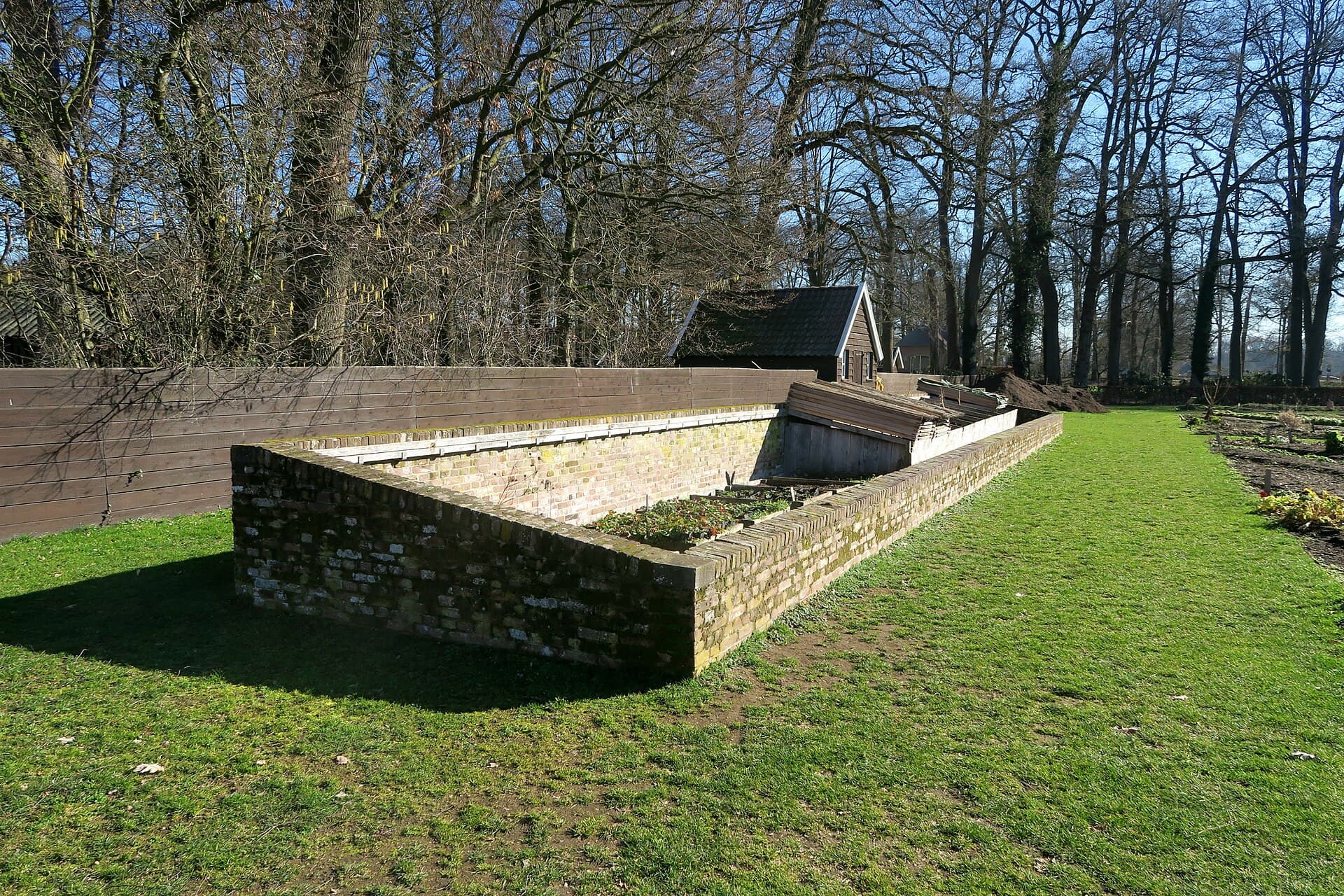
Sow or plant outdoors. A cold frame, which is a bottomless box with a clear lid set against a south-facing wall, lets you sow spinach, lettuce and radishes in a mild spell, while the soil can be worked. They sprout slowly and mostly sit through the darkest weeks, then grow fast in late winter for an early spring harvest. Water sparingly, since plants use little in winter and wet leaves invite rot. Where rabbiteye blueberries are hardy, they can still go in while the soil is workable and not frozen.
Harvest. Pick kale, collards, leeks and carrots as you need them. Frost sweetens kale and carrots, so they taste best now.
Protect. Keep the cold frame closed on cold days and nights, and lay row cover over the plants when the forecast drops below about 20°F (-7°C). On mild, sunny days, open the lid a crack so the plants do not overheat. Mulch garlic and strawberries, and guard young apple trunks as in colder places.
Where frost is light or rare
This is roughly zones 8 to 10. Zones 8 and 9 can still see hard freezes and zone 10 an occasional frost, and the right dates differ from one place to the next.
Sow or plant outdoors. Real calendars show how much the dates differ.
- In Texas, Texas A&M AgriLife Extension lists dates for zone 8 (its Region III) of October 10 for leaf lettuce, October 15 for beets, November 10 for carrots and November 15 for spinach, and October for garlic. Its table gives these five crops December dates in its warmer regions: spinach on December 1 in zone 9a (Region IV), and in zone 9b (Region V) leaf lettuce on December 1, beets, carrots and spinach on December 15, and garlic in December. Its last optimum dates for brassica transplants are October 20 in zone 9a and November 20 in zone 9b.
- In Georgia, University of Georgia Extension's statewide fall table gives leaf lettuce from September 1 to October 15, carrots from August 15 to September 15 and garlic from September 1 to October 1. Its garden calendar, written for middle Georgia (a belt across the state from Columbus through Macon to Augusta), has no planting in November or December.
- In Florida, UF/IFAS Extension lists brassica transplants for December and, for central and south Florida, potatoes. In South Florida it lists beans, cucumbers and squashes to sow from seed in December, and tomatoes and peppers to set out as transplants.
Radishes (22 to 30 days) and arugula (30 to 40 days) are the quickest crops, spinach takes 40 to 50 days and kale 50 to 65. Expect all of them to run slower in the short days of winter. For tomato seed started indoors, count back 6 to 8 weeks from your last spring frost, as the tomato guide explains.
Harvest. Pick lettuce, kale, carrots and other cool-season crops as they size up.
Protect. Keep frost cloth or old sheets on hand, and water the soil before a freeze, because moist soil holds more heat than dry. Cover plants before dusk, take the cover off in the morning and keep plastic from touching the leaves. If you grow citrus (orange, lemon and lime, which suit zones 9 to 11), the trees are the main frost job: cover the whole tree down to the ground before dusk, and uncover it the next morning.
Jobs for every zone
- Plan and order. Sketch next year's beds and order seed now, while the choice is wide. Don't plant tomatoes and potatoes where either grew in the past three years, because they share diseases.
- Test the soil. Your state's extension service can analyze a sample. If you plan to grow blueberries, test the pH now, because sulfur works slowly and needs months before planting.
- Check what is in storage. Look over stored garlic, potatoes and apples, and remove any that soften, sprout or rot.
- Look after tools. Clean and sharpen them, and in freezing zones drain hoses and irrigation lines so ice cannot split them.
- Mulch bare beds. A layer of shredded leaves or compost over empty soil shelters it from winter rain and feeds it as it breaks down.
- Feed the compost. Add fallen leaves, shredded if you can, and turn the pile when it is not frozen.
- Note your frost dates. Write down your first fall frost and your coldest nights. They set the calendar for next year's sowing in every guide on this site.