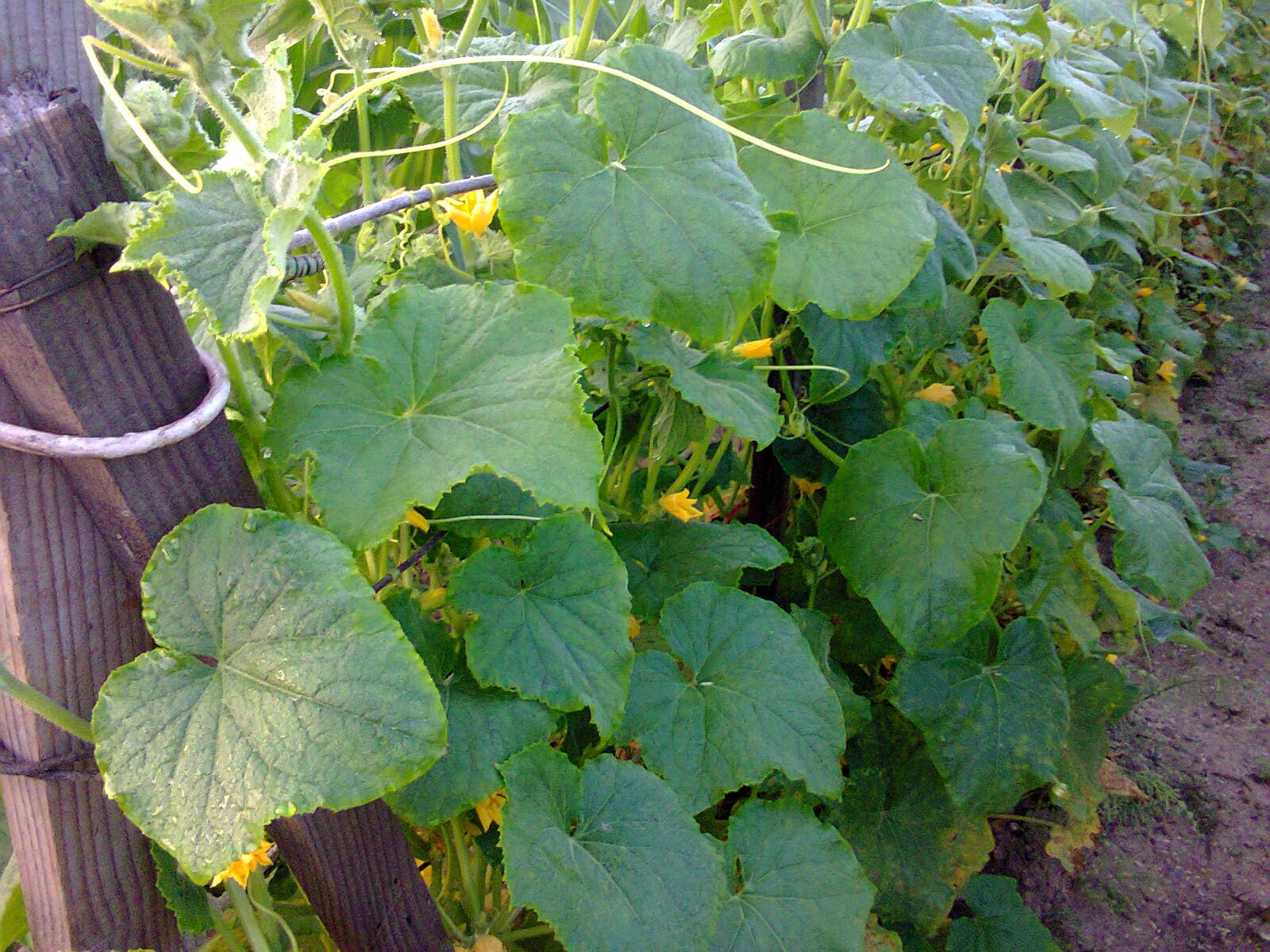
A cucumber vine climbs a trellis and keeps fruiting for weeks, which makes it a good fit even for a small garden. Water is where most gardeners slip: the fruit is mostly water, and a plant that dries out turns bitter and misshapen. Give it warm soil, a sturdy trellis and steady moisture.
At a glance
- Sun: Full sun
- Water: High
- Days to maturity: 50 to 70 days
- Spacing in the row: 12 in (30 cm)
- Spacing between rows: 3 to 4 ft (0.9 to 1.2 m)
- Mature spread: 12 to 18 in (30 to 46 cm)
- Good neighbors: beans, peas, radish, nasturtium, corn
- Keep apart from: sage, potato, aromatic herbs
When to plant
Cucumbers are tender. Frost kills them and cold soil stalls them, so sow outdoors 1 to 2 weeks after your average last frost, once the soil has warmed to at least 65°F (18°C). Your state's cooperative extension service can give you that date and your average first fall frost date; your hardiness zone cannot, because it is drawn from the coldest winter temperature, not from frost dates. Where the season is short, start seeds indoors 3 to 4 weeks earlier, one per pot, because cucumbers resent root disturbance, and set them out after frost danger has passed. Count forward too: the 50 to 70 days to harvest must finish before your first fall frost, which ends the crop, so a fall crop has to be sown at least that long before it. In midsummer heat, plants often stop setting fruit.
Dates differ by region. Clemson Extension, for example, has cucumbers sown from March 15 to May 15 on the South Carolina coast.
Where and in what soil
Choose a spot with full sun and a trellis at least 5 feet (1.5 m) tall, since the vines climb by tendrils. Put it on the north side of the bed so it does not shade shorter crops. The soil should be fertile and well drained, with a pH between 6.0 and 7.0. Cucumbers are thirsty, so mix 2 to 3 inches of compost into sandy soil, which holds water better with it.
Planting
Sow seeds 1 inch (2.5 cm) deep, two or three to a spot, and thin to the strongest seedling. Space plants 12 inches apart along the trellis, in rows 3 to 4 feet apart. As the vines lengthen, guide them onto the supports and tie any that wander. Extension guides thin trellised plants to between 8 and 12 inches apart, so 12 inches is the wide end; one guide goes as close as 6 inches.
Care
Water. Cucumbers need 1 to 2 inches (2.5 to 5 cm) a week, more in hot weather. Water deeply at the base, and never let the soil dry out completely.
Mulch. Spread 2 to 3 inches (5 to 8 cm) of straw or shredded leaves once the soil is warm. It holds moisture and keeps fruit clean.
Feeding. Dig in compost at planting, then side-dress with compost or a balanced fertilizer when the first flowers open, following the label.
Flowers and pollination. Most varieties carry separate male and female flowers; the female has a tiny cucumber behind the bloom. Bees move the pollen, so keep sprays off open flowers. Seedless (parthenocarpic) hybrids produce mostly or all female flowers and do not need pollination.
Good neighbors, and plants to keep apart
Every cucumber pairing here is what gardeners report from experience. Plant good neighbors within about 2 feet (60 cm) and keep poor ones at least 4 feet (120 cm) away.
Good neighbors
- Beans, peas, radish, nasturtium, corn and sunflower. Gardeners say radish deters cucumber beetles.
Keep apart
- Potato, and the aromatic herbs sage, rosemary, thyme and oregano.
Pests and problems
Cucumber beetles and bacterial wilt. Yellow beetles with black stripes or spots chew seedlings, leaves and flowers, and spread a wilt disease. A plant that collapses suddenly and does not recover, with sticky strands when you pull a cut stem apart, has it. Cover seedlings with row cover until the first flowers, then remove it so bees can work, unless the variety is seedless, which needs no pollination. Hand-pick beetles in the morning, and pull and bin wilted plants.
Powdery mildew. A white, powdery coat on the leaves, common in late summer. Trellising for airflow, watering at the base and choosing resistant varieties all help. Remove badly affected leaves, and use a fungicide labeled for cucumbers if it starts early, following the label.
Aphids. Curled leaves with sticky residue and clusters of tiny insects underneath. Knock them off with a strong spray of water, and repeat every few days.
Harvest and storage
Pick slicing cucumbers at 6 to 8 inches (15 to 20 cm) long, while they are firm and dark green; pickling types are picked smaller, at about 2 to 5 inches (5 to 13 cm). Check the vines every day or two in peak season, because a fruit left to turn yellow and swell tells the plant to stop producing. Cut the stem with pruners rather than pulling.
Refrigerate unwashed cucumbers in the crisper and use them within about a week. They soften and develop sunken spots if held cold for long.
Common questions
Why do my first flowers fall off without making cucumbers?
On most varieties the first 10 to 20 flowers are male, and they are meant to drop. Female flowers, with a baby cucumber behind each, follow.
Why are my cucumbers bitter?
Stress, mostly: heat, drought or uneven watering makes the skin and the stem end bitter. Water deeply and mulch, and peel the fruit if you still get a bitter one.
Can I grow cucumbers without a trellis?
Yes, but the vines sprawl across the row spacing above, the fruit lies on damp soil and leaves stay wet longer, so disease is more likely. In a pot, choose a compact bush variety and still give it something to climb if you can.