Blueberries are fussy about one thing, and it is the soil. Highbush types need an acidic soil with a pH between 4.5 and 5.5, and a bush in ordinary garden soil stays yellow and stunted however well you care for it. Test the soil first, correct it before planting and plant at least two varieties for a good crop.
At a glance
The highbush figures here describe northern highbush; southern highbush hybrids have different climate requirements.
- Hardiness zones: rabbiteye 7 to 9
- Sun: Full sun (both types)
- Water: highbush High; rabbiteye Medium
- Years to bear: both types 2 to 3 years
- Spacing in the row: highbush 4 to 6 ft (1.2 to 1.8 m); rabbiteye 6 ft (1.8 m)
- Spacing between rows: highbush 8 to 12 ft (2.4 to 3.7 m); rabbiteye 10 to 12 ft (3.0 to 3.7 m)
- Mature spread: highbush 4 to 6 ft (1.2 to 1.8 m); rabbiteye 4 to 10 ft (1.2 to 3.0 m), depending on cultivar and pruning
- Mature height: highbush 5 to 8 ft (1.5 to 2.4 m); rabbiteye 6 to 15 ft (1.8 to 4.6 m), depending on cultivar and growing conditions
- Soil pH: highbush 4.5 to 5.5; rabbiteye a little higher
- Keep apart from: walnut trees, because highbush is juglone-sensitive
When to plant
Plant dormant or potted bushes. The types differ in how much winter cold they take, and the limits are looser than a single zone number suggests: northern highbush is rated for zones 4 to 8 by one extension source, and rabbiteye suits zones 7 to 9. In Florida, UF/IFAS Extension says southern highbush, which is less cold tolerant than rabbiteye, is best suited to the central part of the state, south of Ocala and north of Sebring; University of Maryland Extension says southern highbush hybrids should grow well in all regions of Maryland except the far west. Where the ground freezes hard, plant in spring as soon as the soil can be worked. Rabbiteye can go in from late fall to early spring. Your state's cooperative extension service can tell you when the soil is usually workable where you live; a hardiness zone, which is a winter low, gives no planting dates.
Where and in what soil
Choose a sunny site with well-drained soil rich in organic matter. Test the pH before you buy plants. If it is above 5.5, mix in elemental sulfur several months ahead, following the lab's rate; it works slowly. For stubbornly alkaline soil, a raised bed filled with acidic mix is the alternative. Avoid lime and wood ash.
Planting
Varieties. Plant two or more varieties of the same type, which gives bigger berries and more of them. Rabbiteye also needs a second rabbiteye variety.
Spacing. Plant highbush 4 to 6 feet apart in rows 8 to 12 feet apart, and rabbiteye 6 feet apart in rows 10 to 12 feet apart.
In the ground. Set each bush at the depth it grew in its pot, tease out any circling roots and water well. Mulch 3 to 4 inches (8 to 10 cm) deep with pine bark, pine needles or wood chips, which keep the soil acidic and moist. Pinch off the flowers for the first year or two so the bush puts its energy into roots.
Care
Water. Roots are shallow and fine, so the soil should never dry out. Highbush wants about 1 to 2 inches (2.5 to 5 cm) a week, and rabbiteye, which tolerates dry spells better, about 1 inch (2.5 cm).
Feeding. Don't fertilize at planting. From the second year, feed in spring with a fertilizer made for acid-loving plants, following the label.
Pruning. From the third or fourth year, prune in late winter. Remove dead and weak branches and low growth that touches the ground, and cut out a few of the oldest canes each year so new ones replace them.
Netting. Birds take the crop as the berries color. Cover the bushes with netting before they ripen, and fasten it at the base so birds cannot slip under.
Plants to keep apart
Highbush blueberry is sensitive to juglone, a chemical that walnut trees release, so keep it away from walnut trees. Juglone is a problem for tomatoes and potatoes too, which are kept about 55 feet (16.8 m) from a walnut.
Pests and problems
Yellow leaves with green veins. Young leaves turn yellow while the veins stay green, and growth stalls. The usual cause is soil that is not acidic enough, which stops the roots taking up iron. Test the soil, lower the pH with sulfur and keep the pine-bark mulch topped up.
Birds. Berries vanish as they color. Net the bushes before the fruit ripens.
Spotted-wing drosophila. Tiny fruit flies lay eggs in ripening berries, which turn soft and collapse with small white larvae inside. Pick ripe fruit promptly and often, don't leave overripe berries on the plant or the ground, and ask your state's extension service about traps and fine netting.
Mummy berry. In cool, wet springs, new shoots wilt and blacken, and berries shrivel into hard, gray-tan mummies. Rake up the mummies and bury them under fresh mulch, and prune out infected shoots.
Harvest and storage
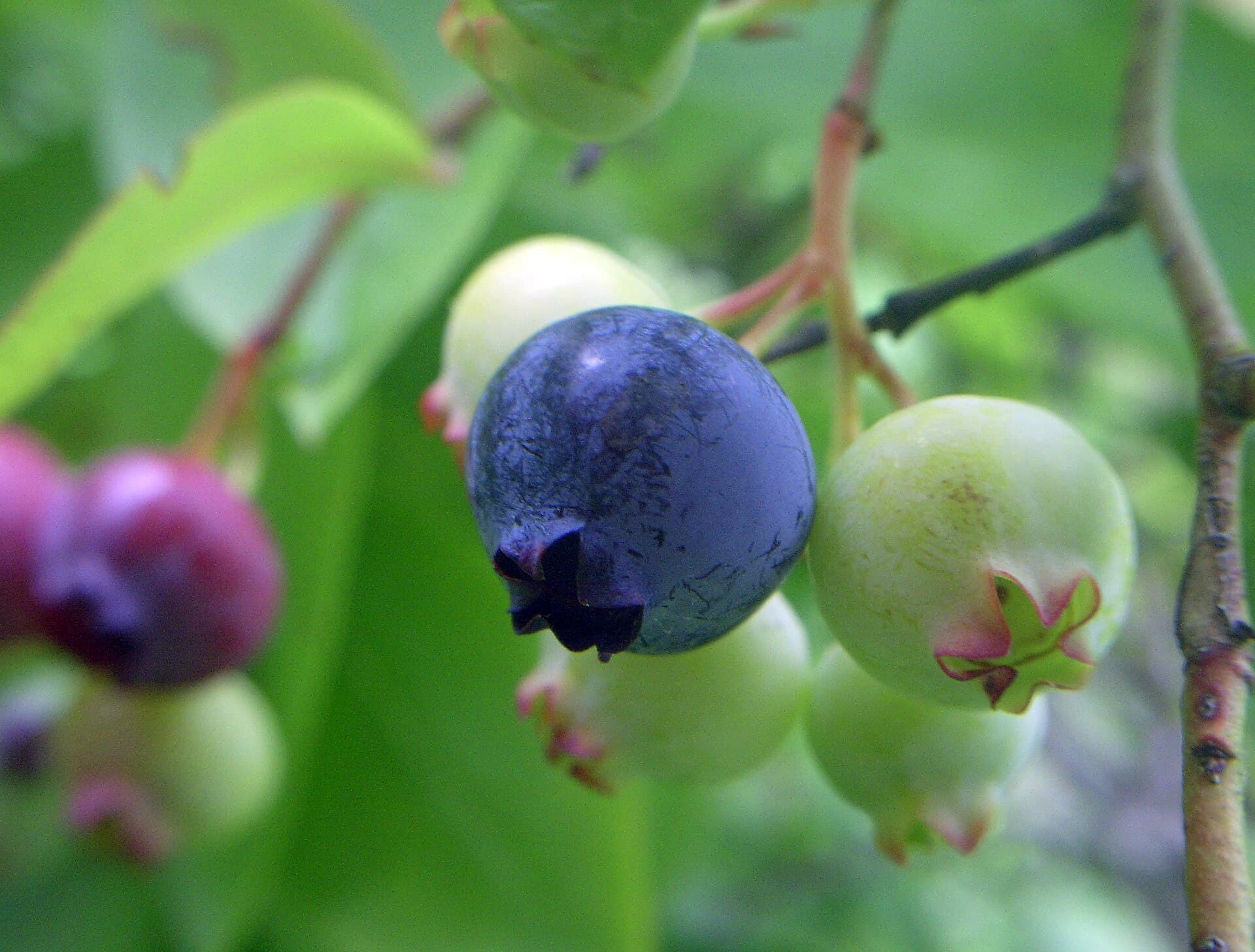
Berries ripen over several weeks, anywhere from late spring to late summer depending on the variety and your climate. A berry is ripe when it is blue all over, with no red near the stem, and drops into your palm when you roll it with your thumb. Wait 3 to 6 days after it turns blue for the best flavor, and pick every few days.
Refrigerate unwashed berries in a shallow container, and wash them just before eating. To freeze, spread unwashed berries on a tray until solid, then bag them.
Common questions
Do I need two blueberry bushes?
Yes. Highbush does best with two or more varieties, and the same applies to rabbiteye. Cross-pollination gives more and larger berries than a single bush.
Should I grow highbush or rabbiteye?
Go by your winters: look to northern highbush where they are cold, to rabbiteye in zones 7 to 9 and, in the central part of Florida, to southern highbush. One extension source rates northern highbush for zones 4 to 8, and rabbiteye tolerates warm climates and needs less water. UF/IFAS Extension says that Florida's winters are not cold enough for northern varieties, that rabbiteye is generally grown in areas of Florida with winters as cold as Ocala's or colder, and that southern highbush, which is less cold tolerant than rabbiteye, is best suited to the central part of the state, south of Ocala and north of Sebring.
Can I grow blueberries in a pot?
Yes. Use a container at least 18 inches (46 cm) wide and deep with drainage holes, filled with acidic potting mix, and keep it evenly moist. Use two pots with different varieties.