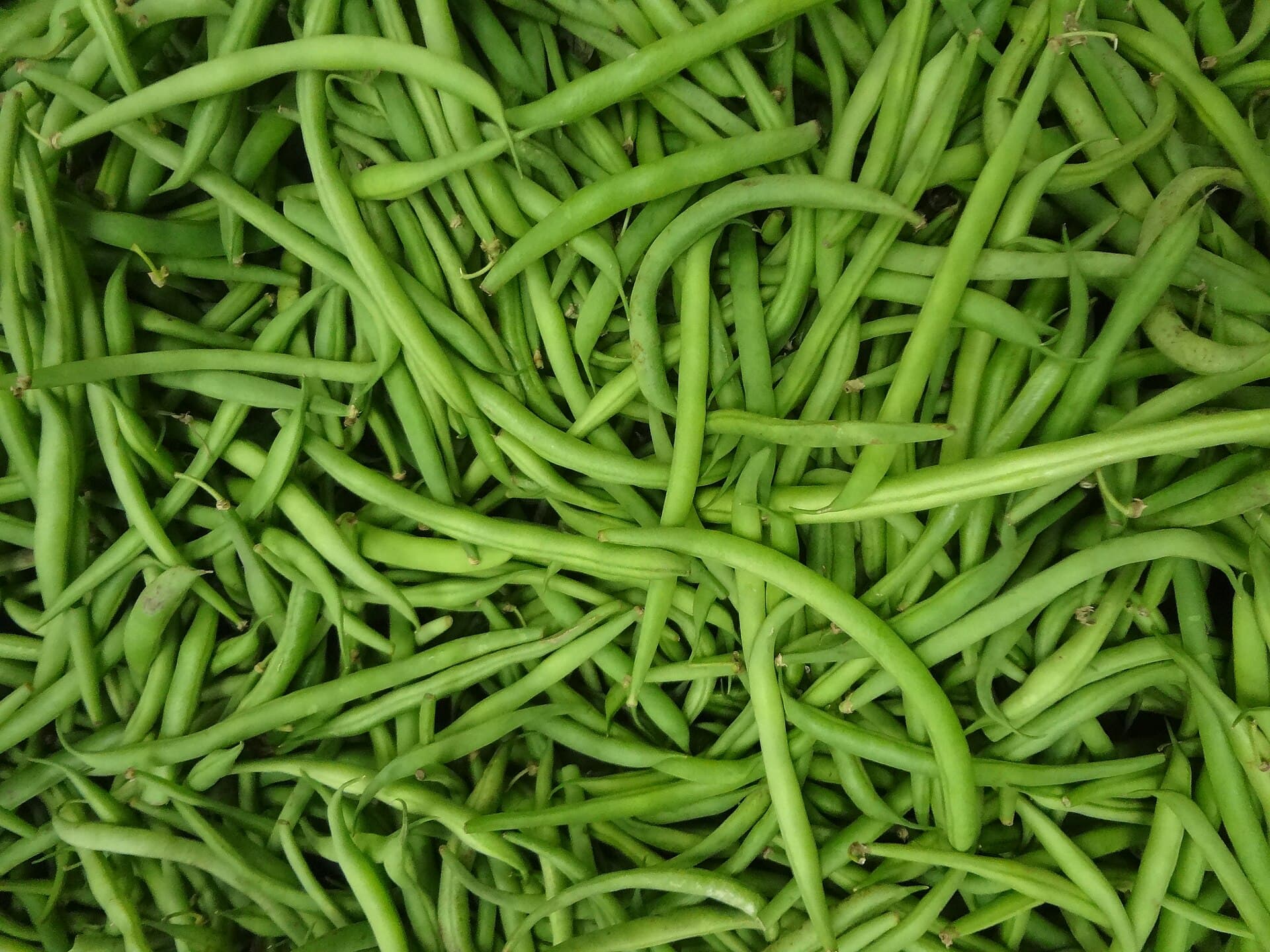
Green beans are among the easiest vegetables to grow, and bush types can start bearing in as little as 50 days. Most failures happen at the start: bean seed rots in cold, wet soil, so sowing early to get ahead usually means sowing twice. Wait for warm soil, sow straight into the garden and keep picking.
At a glance
- Sun: Full sun (both types)
- Water: Medium (both types)
- Days to maturity: bush 50 to 60 days; pole 60 to 70 days
- Spacing in the row: both types 4 to 6 in (10 to 15 cm)
- Spacing between rows: bush 18 to 24 in (46 to 61 cm); pole 30 in (76 cm)
- Mature spread: both types 6 in (15 cm)
- Mature height: bush 18 in (46 cm); pole 6 to 8 ft (1.8 to 2.4 m)
- Plants per square foot: bush 9
- Good neighbors: for bush beans, corn, cucumber, potato, carrot and marigold; for pole beans, corn and squash
- Keep apart from: for bush beans, onion, garlic, leek and fennel; for pole beans, alliums (the onion family), fennel and beets
When to plant
Beans are frost-tender and resent transplanting, so sow seed straight into the garden 1 to 2 weeks after your last frost, once the soil is at least 60°F (16°C). Your state's cooperative extension service can give you that date and your average first fall frost date; a hardiness zone, which reflects only the coldest winter temperature, cannot. Sow bush beans every 2 to 3 weeks for a steady supply, with the last sowing 8 to 10 weeks before your first fall frost. Pole beans need one sowing, because they keep bearing for weeks. Blossoms drop in heat above about 90°F (32°C), so where summers are hot, beans skip midsummer.
Extension calendars give the last sowing as a date. Penn State Extension, for example, has gardeners sow until August 1 in Pennsylvania, and University of Maryland Extension says mid-to-late July in Maryland.
Where and in what soil
Beans want full sun and well-drained soil with a pH between 6.0 and 7.0. Dig in a little compost before sowing, and no more.
Planting
Sow seed 1 inch (2.5 cm) deep and 4 to 6 inches apart. Space bush bean rows 18 to 24 inches apart and pole bean rows 30 inches apart. For pole beans, sow along the base of the support. In a square-foot bed, plant 9 bush beans per square foot; pole beans belong in a single row along a support.
Care
Water. Give beans about 1 inch (2.5 cm) a week, applied at the base. Wet leaves invite disease, and so does working among plants while they are wet, so wait until the foliage dries.
Mulch. Once seedlings are up, spread a thin layer of straw or shredded leaves to hold moisture and suppress weeds.
Feeding. Beans make their own nitrogen, so skip nitrogen fertilizer, which grows leaves at the expense of pods.
Support. Pole beans need a sturdy support as tall as the plants will grow, 6 to 8 feet (1.8 to 2.4 m): a trellis, a teepee of poles or a fence. Set it up before sowing, and guide the first shoots onto it.
Keep picking. Pods left to ripen on the plant tell it to stop flowering. Pick often and the plants produce for longer.
Good neighbors, and plants to keep apart
Most companion advice for beans is what gardeners report from experience. Plant good neighbors within about 2 feet (60 cm), and keep poor ones at least 4 feet (120 cm) away.
Good neighbors
- Corn and squash, including zucchini: the traditional "Three Sisters" planting, which extension guidance describes.
- Carrot, cucumber, potato, marigold and nasturtium: gardeners report that they help.
Keep apart
- Onion, garlic and leek: said to stunt beans.
- Fennel: said to stunt the growth of neighboring plants.
- Chives, scallion, shallot and peppers: gardeners advise keeping them away from beans. For pole beans, gardeners also advise keeping the cabbage family and beets away.
Pests and problems
Mexican bean beetle. Copper-colored, ladybug-like beetles and spiny yellow larvae scrape the undersides of leaves into lace. The beetle is found in most states east of the Rocky Mountains. In eastern regions it is present wherever beans are grown, while western infestations are in isolated areas. Hand-pick adults and larvae, crush the yellow egg clusters under the leaves, and clear plant debris in fall.
Aphids. Curled leaves and clusters of tiny insects underneath. Knock them off with a strong spray of water, and repeat every few days.
Rust and blight. Reddish-brown pustules on leaf undersides (rust), or water-soaked spots with yellow halos (bacterial blight). Both spread on wet foliage. Water at the base, stay out of wet plants, pull badly affected ones and avoid planting beans in the same place two years running.
Rabbits and deer. Seedlings nipped off at the stem or stripped of leaves. Fence the bed, or cover young plants with row cover until they are well established.
Harvest and storage
Pick bush beans from about 50 days. The pods are ready when they are slender and firm and snap cleanly, before the seeds bulge inside; about pencil thick is a good guide. Check every 2 or 3 days. Hold the stem with one hand and pull the pod with the other so you do not uproot the plant.
Store unwashed beans in a bag in the refrigerator for up to a week. For longer storage, blanch briefly and freeze.
Common questions
What is the difference between bush and pole beans?
Bush beans grow about 18 inches (46 cm) tall, need no support and crop heavily over a few weeks. Pole beans climb to 6 to 8 feet (1.8 to 2.4 m), need a support, start about 10 days later and keep bearing until frost.
Why didn't my bean seeds come up?
Cold, wet soil is the usual cause: the seed rots before it sprouts. Wait until the soil reaches 60°F (16°C) and drains well, and sow again.
Why are my plants flowering but not making pods?
Heat above about 90°F (32°C) or drought makes the blossoms drop. Water steadily, mulch and pick regularly, and the plants will set pods again when the weather cools.