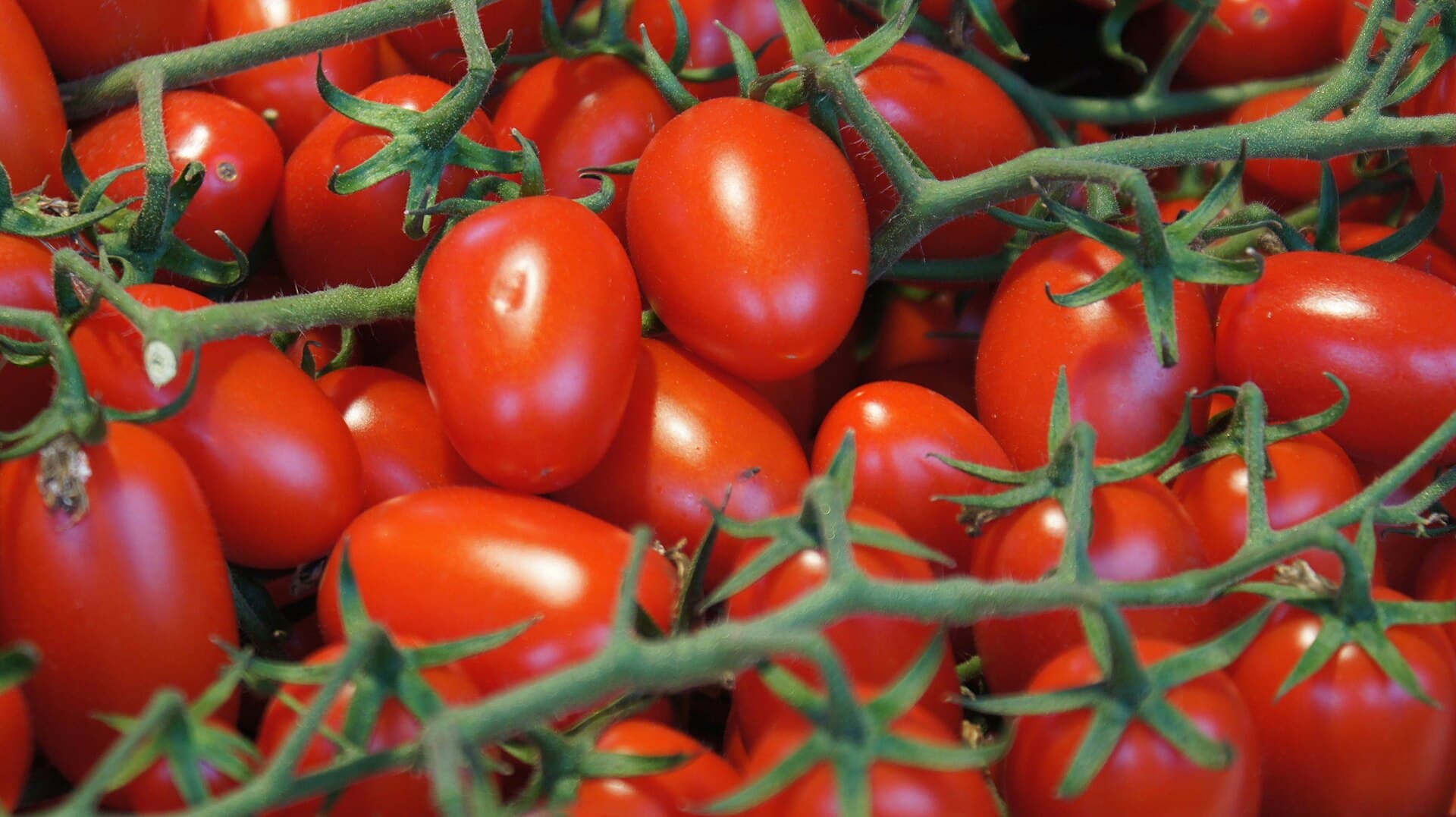
A tomato ripened on its own vine is the best argument for a vegetable garden, and it takes little more than sun, a stake and steady watering. The usual mistake is the calendar: tomatoes are warm-weather plants, so they go out when the nights are warm, not on the first sunny day of spring. Plant them deep, support them early and keep the soil evenly moist.
At a glance
- Sun: Full sun
- Water: Medium
- Days to maturity: 60 to 85 days (the usual count runs from transplanting)
- Spacing in the row: 18 to 36 in (46 to 91 cm)
- Spacing between rows: 36 in (91 cm)
- Mature spread: 24 in (61 cm)
- Mature height: 3 to 6 ft (0.9 to 1.8 m)
- Good neighbors: basil, marigold, borage, carrot, parsley, nasturtium
- Keep apart from: potato, fennel, brassicas (the cabbage family), corn, walnut
When to plant
Work from your average last spring frost date, which your state's cooperative extension service can give you along with your average first fall frost date. Your hardiness zone will not do instead: zones are drawn from the average coldest winter temperature and say nothing about frost or planting dates. Start seed indoors 6 to 8 weeks before the last frost, and plant out a week or two after it, once nights stay above 50°F (10°C) and the soil has reached about 60°F (16°C). Tomatoes in cold soil stall, so a later planting often catches up with an early one. Count forward from planting too: the 60 to 85 days to ripe fruit must fit before your first fall frost. Where the season is short, choose varieties at the short end of that range, and keep a sheet or row cover ready for an early fall frost.
Real calendars show how far the dates vary. University of Illinois Extension, for example, sets tomatoes out between April 28 and May 15 in southern Illinois, between May 10 and June 1 in central Illinois and between May 24 and June 15 in northern Illinois. Let the nights and the soil, not the date, make the final call.
Where and in what soil
Give tomatoes the sunniest spot you have. Full sun means at least 6 hours of direct light, and 8 is better. They want loose, well-drained soil rich in organic matter, with a pH between 6.0 and 6.8. Dig in 2 to 3 inches of compost before planting.
Don't plant tomatoes where tomatoes, potatoes, peppers or eggplant grew in the past three years, because they share soil-borne diseases.
Planting
From seed. Sow 1/4 inch (6 mm) deep in seed-starting mix at 70 to 80°F (21 to 27°C); seedlings appear in 5 to 10 days. Keep them under bright light, and harden them off for 7 to 10 days before planting out.
Setting out. Stems root wherever they are buried, so plant deep: pinch off the lower leaves and bury the stem up to the first set of leaves. A leggy seedling can lie on its side in a shallow trench. Set any stake or cage at planting, before the roots spread, and water well.
Spacing. In conventional rows, allow 18 to 36 inches between plants. UMass Extension recommends 3 feet between rows for staked, pruned tomatoes and 4 to 5 feet for unstaked plants. The Square Foot Gardening Foundation uses one vining tomato per square foot in its intensive method; conventional row-spacing figures do not describe that layout. Stake or cage vining types (see Support below).
Care
Water. Aim for 1 to 2 inches (2.5 to 5 cm) a week, rain included, applied slowly at the base in the morning. Swings between dry and soaked soil split fruit and cause blossom-end rot (see below).
Mulch. Once the soil is warm, spread 2 to 3 inches (5 to 8 cm) of straw or shredded leaves, a hand's width from the stems. It steadies moisture and stops rain splashing disease spores up from the soil.
Feeding. Compost at planting is enough to start. When the first fruit reaches the size of a golf ball, side-dress with compost or a balanced fertilizer, following the label. Too much nitrogen grows leaves instead of fruit.
Support. Vining ("indeterminate") plants keep growing until frost and need a tall stake or cage; tie them loosely as they climb. Compact "determinate" bush types stop at a set height and need less help.
Good neighbors, and plants to keep apart
Most companion advice for tomatoes is what gardeners report from experience, so treat it as a starting point. Plant good neighbors within about 2 feet (60 cm) and keep poor ones at least 4 feet (120 cm) away, except walnut.
Good neighbors
- Basil and marigold: extension guidance on companion planting lists them against thrips on tomatoes. Marigolds planted among tomatoes do not reduce root-knot nematodes; marigolds help against them when grown thickly as a cover crop and tilled in.
- Borage: gardeners report that it deters hornworms and draws pollinators.
- Carrot, parsley, nasturtium, chives, garlic, onion, leek, scallion and shallot: gardeners report that they help.
Keep apart
- Potato: the two share blight.
- Corn: the two share the corn earworm, also called the tomato fruitworm.
- Fennel: said to stunt the growth of neighboring plants.
- Black and English walnut: juglone from their roots harms tomatoes, so keep them about 55 feet (16.8 m) away.
- Brassicas, the cabbage family: gardeners advise keeping them apart.
Pests and problems
Blossom-end rot. A dark, sunken, leathery patch on the bottom of the fruit, often on the first ones. Uneven watering keeps calcium from reaching the fruit; the soil usually has enough. Water evenly, mulch and remove affected fruit. Calcium sprays on the leaves may partly help young fruit and are a stopgap at best; even watering is the fix.
Early blight and leaf spots. Brown, ringed spots on the lower leaves, which yellow and drop. Remove affected leaves, keep mulch down and rotate crops. If it keeps spreading, use a fungicide labeled for tomatoes, following the label.
Late blight. Large, greasy-looking dark patches on leaves, firm brown areas on fruit and white fuzz underneath in cool, wet weather. It spreads between tomatoes and potatoes. Pull the plant at once, bag it and put it in the trash, not the compost.
Tomato hornworm. A fat green caterpillar, up to 4 inches (10 cm) long, that strips leaves and chews fruit; black droppings on the leaves below give it away. Pick it off by hand, but leave any with white rice-like cocoons on its back, which are parasitic wasps. In a small garden, pesticides are typically not necessary. A bacterial caterpillar insecticide (Bt) works only on young caterpillars, those less than 1/2 inch (1.3 cm) long; if you use one, follow the label.
Harvest and storage
Pick when the fruit is fully colored and gives slightly to a gentle squeeze, twisting it off with the green cap attached. To dodge cracking and birds, pick at first color and finish ripening indoors.
Keep tomatoes at room temperature, out of direct sun. Refrigerating dulls the flavor and makes the flesh mealy, so chill only cut or overripe fruit. Before the first fall frost, pick full-size green fruit and ripen it indoors in a single layer at 65 to 70°F (18 to 21°C). Whole raw tomatoes also freeze well for cooking, and the skins slip off as they thaw.
Common questions
Should I prune my tomato plants?
Only vining types. Pinch off the shoots that grow in the leaf joints (suckers) while they are small, and any leaves that touch the soil. Bush types need no pruning, and removing their shoots cuts the crop.
Why are my plants flowering but not setting fruit?
Temperature is the usual cause. Blossoms drop when nights fall below about 55°F (13°C) or days pass 90°F (32°C), and flowers set again once it moderates. Too much nitrogen also favors leaves over fruit.
Can I grow tomatoes in a pot?
Yes: one plant per container of at least 5 gallons (19 L), with drainage holes, fresh potting mix and a stake or cage. Pots dry out fast, so check them daily in summer.