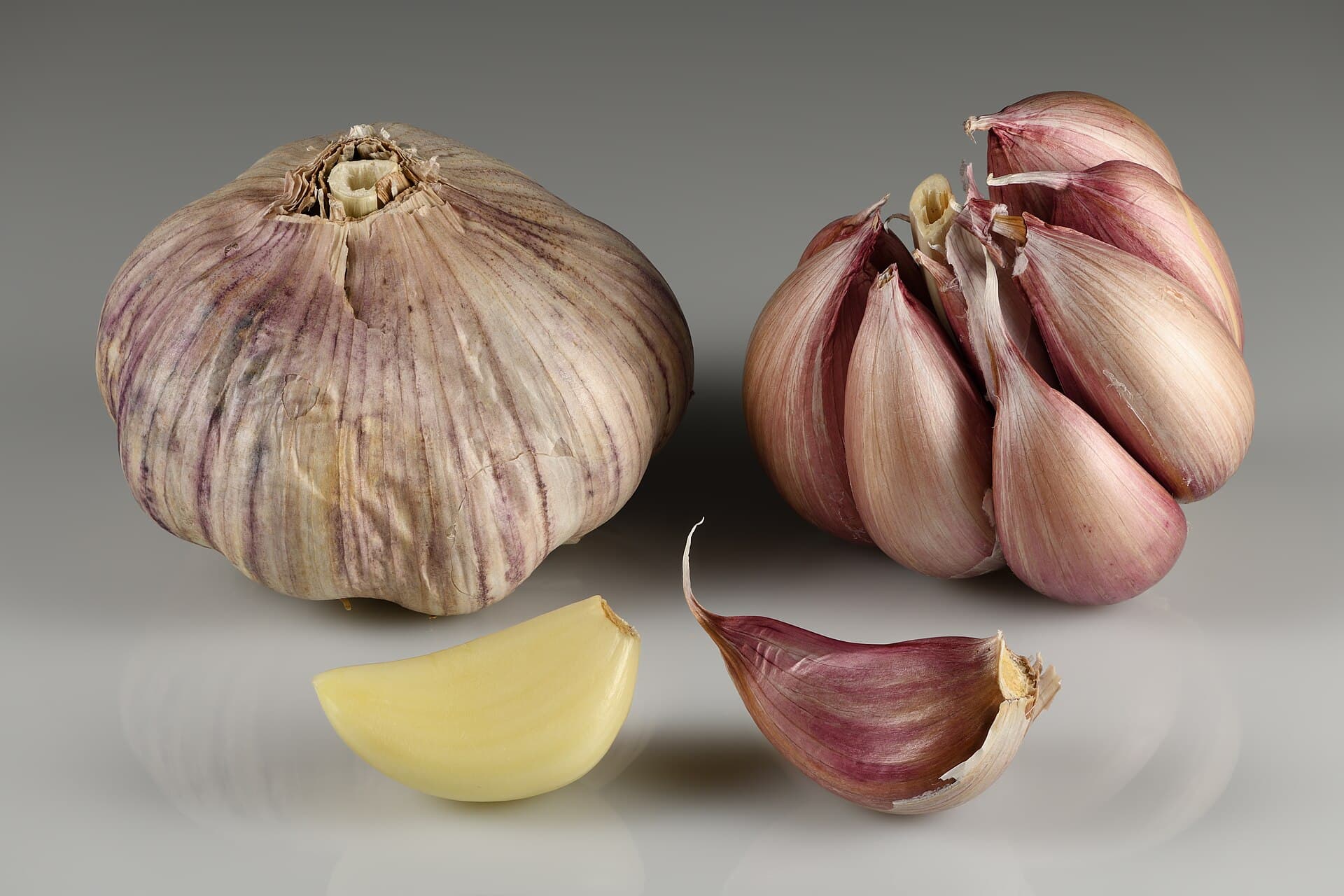
Garlic takes almost no work: you plant a clove in fall, mulch it, and lift a whole bulb the next summer. Its one trap is the calendar: garlic goes in the ground in fall, not spring, because it needs a stretch of cold weather to form a bulb. Plant on time, mulch well and give it its full eight months in the soil.
At a glance
- Life cycle: perennial, grown as a one-season crop: planted in fall, harvested the next summer
- Sun: Full sun
- Water: Low
- Days to maturity: 240 days
- Spacing in the row: 4 to 6 in (10 to 15 cm)
- Spacing between rows: 12 in (30 cm)
- Mature spread: 4 in (10 cm)
- Mature height: 18 in (46 cm)
- Plants per square foot: 9
- Good neighbors: tomato, brassicas (the cabbage family), carrot
- Keep apart from: beans, peas, asparagus
When to plant
Plant in fall, about 1 to 2 weeks after your first killing frost, so the cloves grow roots but little top growth before winter. Your state's cooperative extension service can give you your average first fall frost date; a hardiness zone, which is a winter low and not a frost date, cannot. Spring-planted garlic usually makes small bulbs, because it misses the cold it needs.
Mild winters do not rule garlic out: UF/IFAS Extension says it can be planted in Florida from late fall through early winter, with softneck types such as Artichoke and Creole.
Where and in what soil
Choose a sunny spot with loose, fertile, well-drained soil and a pH between 6.0 and 7.0. Wet soil rots cloves over winter, so in heavy clay use a raised bed. Mix in compost before planting. Don't plant garlic where onions, garlic, leeks or shallots grew in the past four years, because bulb mites and soil-borne diseases linger.
Planting
Buy bulbs sold for planting rather than grocery-store garlic, which may be treated to stop sprouting and can carry disease. Break the bulb into cloves just before planting, leaving the papery skin on each, and use the biggest cloves, which grow the biggest bulbs.
Set each clove pointed end up, 2 to 3 inches (5 to 8 cm) deep and 4 to 6 inches apart in rows 12 inches apart. In a square-foot bed, plant 9 per square foot. Then mulch with 4 to 6 inches (10 to 15 cm) of straw or shredded leaves, which protects the cloves from freezing and thawing.
Care
Water. Garlic needs less water than most crops, but give it about 1 inch (2.5 cm) a week in dry spells in spring, while the leaves are growing. Stop watering about 2 weeks before harvest so the wrappers can dry.
Feeding. In early spring, as shoots grow, feed with compost or a nitrogen fertilizer, following the label. In Minnesota, University of Minnesota Extension says to avoid applying nitrogen after the first week in May, or you may delay bulbing. Ask your state's extension service when to stop where you live.
Weeds and mulch. Garlic competes poorly, so keep weeds out by hand. Extension sources differ on the winter mulch. In Minnesota, University of Minnesota Extension says to remove it in spring, once the threat of hard freezes is over, to help the soil warm up, and also allows leaving it in place, which helps with weed control and preserves soil moisture. Another extension source says to remove it, and a third says that plants without mulch resume growth sooner and make larger bulbs.
Scapes. Hardneck garlic sends up a curling flower stalk in early summer. Snip it off just after it starts to curl, so the plant puts its energy into the bulb; one extension source found that waiting until it coils cuts bulb size by about 9 percent. The scapes are edible.
Good neighbors, and plants to keep apart
Most companion advice for garlic is what gardeners report from experience. Plant good neighbors within about 2 feet (60 cm), and keep poor ones at least 4 feet (120 cm) away.
Good neighbors
Keep apart
- Beans, whether bush, pole or lima: garlic is said to stunt them.
- Peas, fava bean, soybean and asparagus: gardeners advise keeping them away from garlic.
Pests and problems
White rot and other bulb rots. Leaves yellow and die back early, and the base of the bulb is soft or covered in white fluff with tiny black specks. White rot survives in soil for many years. Pull and bin infected plants, keep alliums out of that bed for many years, start with healthy cloves and keep the bed well drained.
Rust. Orange, powdery pustules on the leaves in cool, damp weather. It is usually minor. Remove affected leaves, give plants room for airflow and rotate beds.
Onion thrips. Silvery streaks on the leaves, with tiny insects in the folds, in hot, dry weather. Knock them off with a strong spray of water and keep weeds down.
Small bulbs. Late planting, small cloves, crowding, spring drought and missed feeding all shrink bulbs. Fix what you can next fall.
Harvest and storage
Harvest when the lower three or four leaves have turned brown and the top five or six are still green. Loosen the soil with a fork and lift the bulbs; don't pull them by the tops.
Cure them before storing. Tie them in bundles or spread them in a single layer in a shaded, airy, dry place for 2 to 4 weeks, until the necks are dry and the wrappers papery. Then trim the roots and tops. Store in a cool, dry, dark place with good airflow. Extension guidance gives 32 to 38°F (0 to 3°C) as the ideal storage temperature, and garlic sprouts fastest between 40 and 60°F (4 to 16°C); one source puts storage at about 60°F (16°C). Softneck types keep 6 to 8 months and hardneck types 3 to 5 months. Save your biggest bulbs to plant in fall.
Common questions
Should I grow hardneck or softneck garlic?
Hardneck has a stiff central stalk and scapes, copes better with cold winters and stores for a shorter time. Softneck makes no scapes, stores longer and braids well, and suits milder winters. Gardeners in zones 3 to 5 usually choose hardneck.
Can I plant garlic in spring?
You can, as early as the soil can be worked, but the bulbs usually stay small because the plants miss winter's chill. Fall planting gives bigger bulbs.
Can I plant garlic from the grocery store?
It often sprouts, but it may carry disease and is often not suited to your climate. Bulbs from a nursery or a local grower are the safer start.