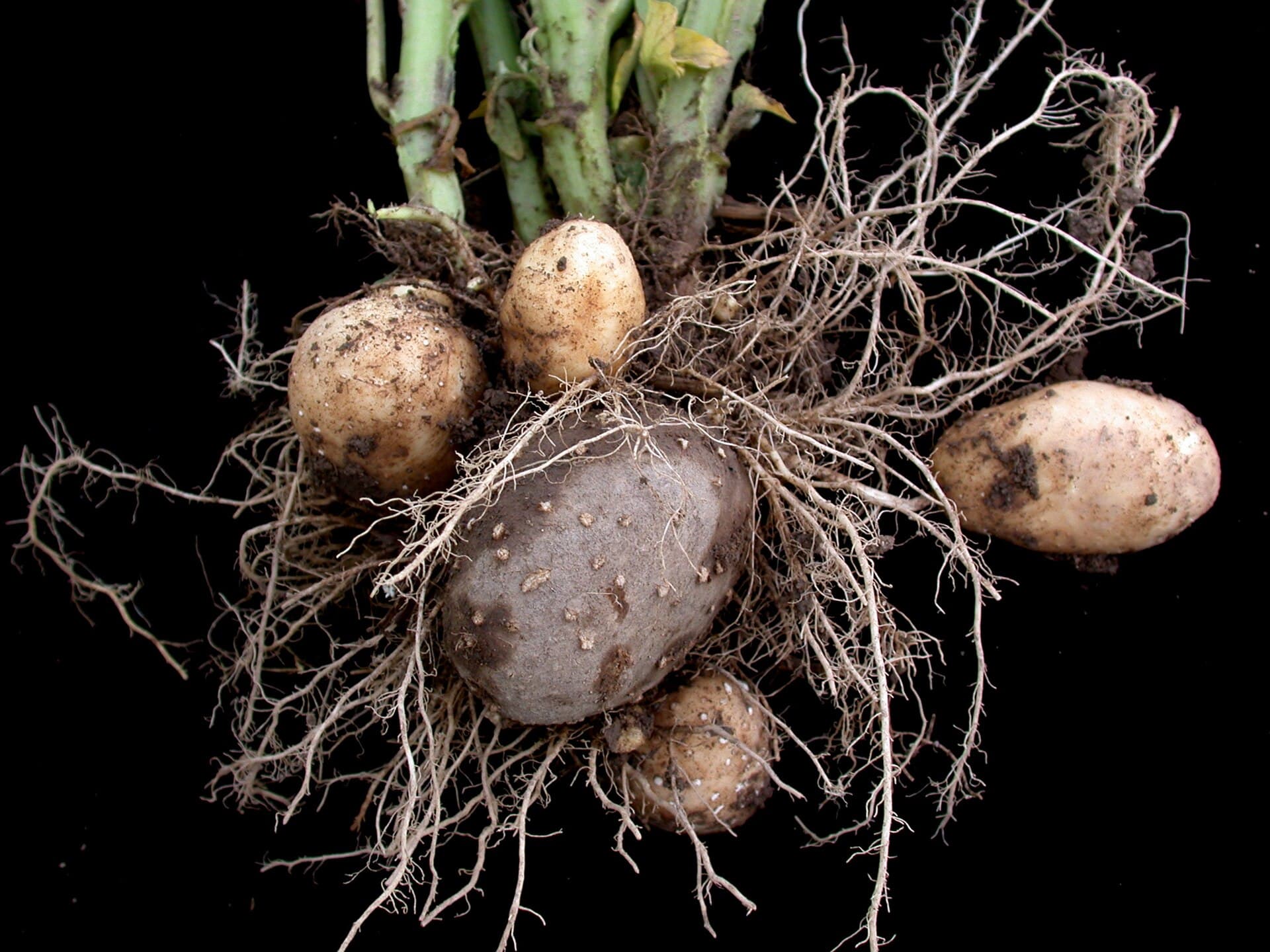
Potatoes are easy to start from a piece of tuber and satisfying to dig, but they depend on one habit that many gardeners skip: hilling. Tubers form just under the soil surface, and any that see light turn green and bitter, so soil has to be piled up around the stems as the plants grow. Hill early, hill again and keep the soil evenly moist.
At a glance
- Sun: Full sun
- Water: Medium
- Days to maturity: 70 to 120 days
- Spacing in the row: 12 in (30 cm)
- Spacing between rows: 30 to 36 in (76 to 91 cm)
- Mature spread: 12 to 18 in (30 to 46 cm)
- Mature height: 24 in (61 cm)
- Good neighbors: beans, corn, horseradish, marigold
- Keep apart from: tomato, fennel, walnut
When to plant
Potatoes are a cool-season crop that goes in early. Plant seed potatoes 2 to 4 weeks before your last frost, once the soil is at least 45°F (7°C) and can be worked without clumping. Your state's cooperative extension service can give you your average last spring frost date; a hardiness zone cannot, since it is a winter low and not a frost date. If frost threatens after the shoots show, cover them with soil or straw. Tubers stop growing when the soil gets hotter than about 80°F (27°C), so aim to have them size up before summer heat. Where winters are cold, the first fall frost kills the vines, so the 70 to 120 days to maturity should end before it.
Real calendars vary widely. University of Minnesota Extension has potatoes planted in early April in the Twin Cities. Dates differ even within one state: in Florida, UF/IFAS Extension gives November to February for central Florida, October to January for south Florida and January to February for north Florida.
Where and in what soil
Give potatoes full sun and loose, fertile, well-drained soil that is slightly acidic, with a pH between 5.0 and 6.5. Avoid fresh manure and lime, which encourage scab. Don't plant potatoes where potatoes, tomatoes, peppers or eggplant grew in the past three years, because they share diseases.
Planting
Buy certified seed potatoes rather than grocery-store potatoes, which may carry disease or be treated to stop sprouting. Cut large tubers into pieces about the size of a hen's egg, each with at least one or two eyes, and let the cut surfaces dry for a day or two. Small tubers can go in whole.
Plant pieces 3 to 4 inches (8 to 10 cm) deep, eyes up, 12 inches apart in rows 30 to 36 inches apart, or in hills at the same distances.
Hilling. When the shoots are 6 to 8 inches (15 to 20 cm) tall, pile soil or straw around the stems, leaving the top few inches of leaves showing. Repeat as the plants grow. Extension guides differ on how high the hill should end up, from about 6 inches (15 cm) to 12 inches (30 cm); what matters is that no tuber sees light.
Care
Water. Aim for about 1 inch (2.5 cm) a week, evenly. Water matters most from flowering, when tubers are forming. Stop watering once the vines start to die back.
Feeding. Work compost into the soil before planting. Avoid heavy nitrogen, which grows vines at the expense of tubers.
Mulch. A thick layer of straw between the hills holds moisture and keeps weeds down.
Good neighbors, and plants to keep apart
Most companion advice for potatoes is what gardeners report from experience. Plant good neighbors within about 2 feet (60 cm), and keep poor ones at least 4 feet (120 cm) away, except walnut.
Good neighbors
- Horseradish and marigold: gardeners report that they keep Colorado potato beetles away, though two university extension pages on the beetle mention neither.
- Beans, corn, catnip, fava bean, lima bean and soybean: gardeners report that they help.
Keep apart
- Tomato: the two share blight.
- Black and English walnut: their roots release juglone, which can harm potatoes, so keep them about 55 feet (16.8 m) away.
- Fennel, cucumber, zucchini and summer squash, winter squash and sunflower: gardeners advise keeping these away from potatoes.
Pests and problems
Colorado potato beetle. Yellow-orange beetles with black stripes, plump orange-red larvae and orange egg clusters on the undersides of leaves; they strip the foliage. Hand-pick beetles and larvae into soapy water and crush the egg clusters. Rotate to a new bed each year and mulch with straw. If numbers keep climbing, use an insecticide labeled for the beetle, following the label.
Late and early blight. Late blight brings dark, water-soaked patches and white fuzz underneath leaves in cool, wet weather, and can flatten a planting in days. Early blight makes dark spots with rings on older leaves. Both also affect tomatoes. Start with certified seed, rotate beds, keep potatoes away from tomatoes, and pull and bag badly affected plants rather than composting them.
Common scab. Rough, corky patches on the skin. The flesh underneath is still good. Keep the soil evenly moist while tubers form and avoid lime and fresh manure.
Harvest and storage
For new potatoes, dig gently from about 2 weeks after the plants flower, when the tubers are egg-sized. For storage potatoes, wait until the vines have died back, then leave the tubers in the ground another 2 weeks so the skins set. Dig on a dry day, starting well away from the stem so you do not spear the crop.
Cure unwashed potatoes for 1 to 2 weeks in a dark, humid place at 50 to 60°F (10 to 16°C), then store them in the dark at 40 to 50°F (4 to 10°C) with some airflow. The refrigerator is too cold, because it turns starch to sugar. Cut away any green patches, and discard a tuber that tastes bitter.
Common questions
Which potatoes are early and which are late?
Days to maturity run from 70 to 120, a range that spans both. Early types mature at the short end and suit new potatoes. Late types take the long end and store best.
Can I grow potatoes in a container?
Yes. Use a container of at least 10 gallons (38 L) with drainage holes, start with a few inches of soil and add more as the plants grow, which does the work of hilling.
Why are the vines dying back?
Late in the season, dying vines mean the tubers are maturing, and that is normal. Vines that die early with dark spots and white fuzz point to blight, so act at once.