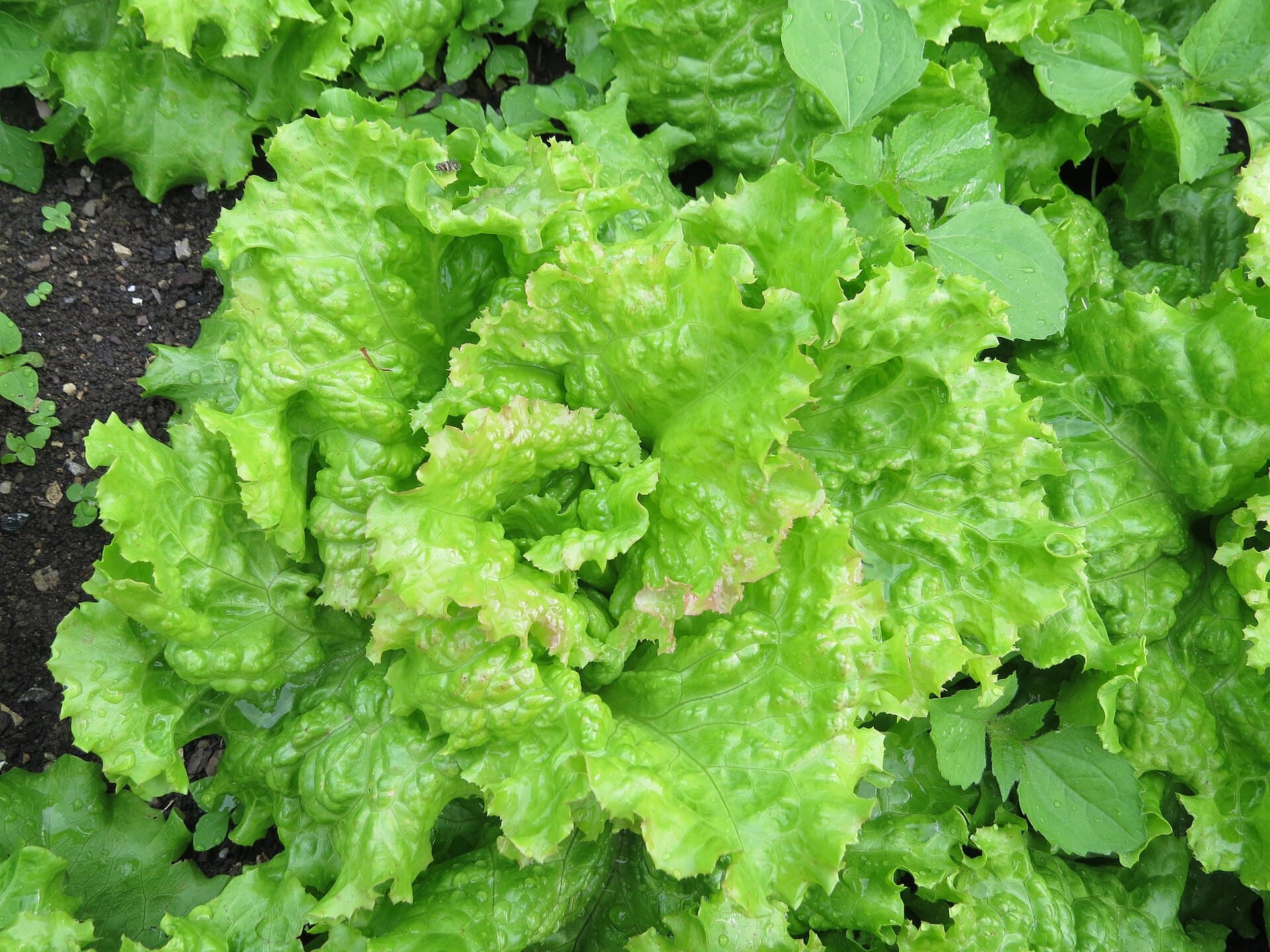
Leaf lettuce can be ready in as little as 45 days, which makes it a fast route to a homegrown salad. Timing decides the crop: lettuce is a cool-weather plant, and sown too late in spring, or in summer heat, it bolts, sending up a bitter flower stalk. Sow early, shade it in warm weather and plan a second crop for fall.
At a glance
- Sun: Part sun (both types)
- Water: Medium (both types)
- Days to maturity: head 60 to 80 days; leaf 45 to 60 days
- Spacing in the row: head 10 to 12 in (25 to 30 cm); leaf 6 in (15 cm)
- Spacing between rows: head 18 in (46 cm); leaf 12 in (30 cm)
- Mature spread: head 10 in (25 cm); leaf 8 in (20 cm)
- Mature height: head 10 in (25 cm); leaf 8 to 10 in (20 to 25 cm)
- Plants per square foot: head 1; leaf 4
- Good neighbors: for head lettuce, carrot and radish; for leaf lettuce, carrot, radish, onion and alyssum
When to plant
Lettuce grows best in cool weather, around 60 to 70°F (16 to 21°C), and bolts and turns bitter once days stay warmer than about 80°F (27°C). Plan for it to mature before the heat arrives. Work from your average last spring frost and first fall frost dates, which your state's cooperative extension service can give you; a hardiness zone says nothing about either. Sow outdoors as soon as the soil can be worked in spring, often 2 to 4 weeks before your last frost, since seedlings shrug off a light frost. Sow a short row every 2 weeks for a steady supply. Seed sprouts poorly in warm soil, so for a fall crop sow 6 to 8 weeks before your first fall frost, in the shade of a taller crop if the weather is still hot.
Regional calendars differ a great deal. University of Illinois Extension, for example, has fall lettuce sown from July 1 to August 31 in central Illinois and from June 15 to August 15 in southern Illinois, while Clemson Extension does not recommend a fall crop in the Piedmont of South Carolina.
Where and in what soil
Lettuce does well in part sun and tolerates shade better than most vegetables. In warm climates, give it afternoon shade. Its roots are shallow, so the soil should be loose, fertile, moist and well drained, with a pH between 6.0 and 7.0. Mix in compost before sowing.
Planting
Sow seed no more than 1/4 inch (6 mm) deep. It sprouts best with some light, so cover it only lightly.
Space head lettuce 10 to 12 inches apart in rows 18 inches apart, and leaf lettuce 6 inches apart in rows 12 inches apart. Thin to those distances once seedlings have their first true leaves, and eat the thinnings as baby greens. In a square-foot bed, plant 1 head or 4 leaf lettuces per square foot.
Care
Water. Give lettuce about 1 inch (2.5 cm) a week. The roots are shallow, so in warm spells water lightly every day or two rather than soaking and waiting.
Mulch and shade. After thinning, mulch lightly to keep the soil cool and the leaves clean. In warm weather, plant on the shady side of taller crops or cover the bed with shade cloth.
Feeding. Work compost into the bed before sowing. About 3 weeks after sprouting, side-dress with more compost or a balanced fertilizer, since leafy crops want steady nitrogen.
Good neighbors
Most companion advice for lettuce is what gardeners report from experience. Plant good neighbors within about 2 feet (60 cm).
- Sweet alyssum: gardeners report that it attracts hoverflies, whose larvae eat aphids.
- Carrot, radish, onion, chives, garlic, leek, scallion, shallot and strawberry: gardeners report that they help.
Pests and problems
Bolting. The center lengthens into a tall stalk and the leaves turn bitter. You cannot reverse it: pull the plant and sow again for the next season. Sow on schedule, shade plants in warm weather and look for varieties sold as bolt-resistant.
Slugs and snails. Ragged holes in the leaves and silvery slime trails, worst in damp weather. Water in the morning so the soil surface dries by evening, clear hiding places such as boards and debris, and hand-pick at dusk. Gardeners report that a shallow dish of beer set at soil level traps some.
Aphids. Clusters of tiny insects under the leaves, which curl and turn sticky. Knock them off with a strong spray of water, and repeat every few days.
Tipburn. Brown, papery edges on the inner leaves of heading types, often in warm weather or after uneven watering. Water evenly and avoid heavy nitrogen.
Harvest and storage
For leaf lettuce, pick the outer leaves when they are 4 to 6 inches (10 to 15 cm) long, and the plant keeps producing from the center. Or cut the whole plant 1 to 2 inches (2.5 to 5 cm) above the base, and it often regrows. Head lettuce is ready when the head feels firm; cut it at the base. Harvest in the morning while the leaves are crisp, and before any sign of bolting.
Rinse, spin or pat dry, and wrap in a paper towel inside a bag or container in the refrigerator. Leaf and Bibb lettuce can keep as long as four weeks if the leaves are dry when bagged, and crisphead about two weeks.
Common questions
What is the difference between head and leaf lettuce?
Head lettuce, which includes butterhead and crisphead types, forms a rounded heart and takes longer: 60 to 80 days against 45 to 60 for leaf lettuce. Leaf lettuce grows loose leaves, can be picked a few at a time and is the easier place to start.
Can I grow lettuce in summer?
It is difficult in most places, because heat triggers bolting. Choose bolt-resistant varieties, sow in partial shade and water often, or wait for fall, when the crop is easier and the weather cooler.
Can I grow lettuce in a pot?
Yes. A container 6 to 8 inches (15 to 20 cm) deep is enough for leaf lettuce, with a few seeds sown every couple of weeks. Check the pot daily in warm weather, because shallow soil dries out fast.