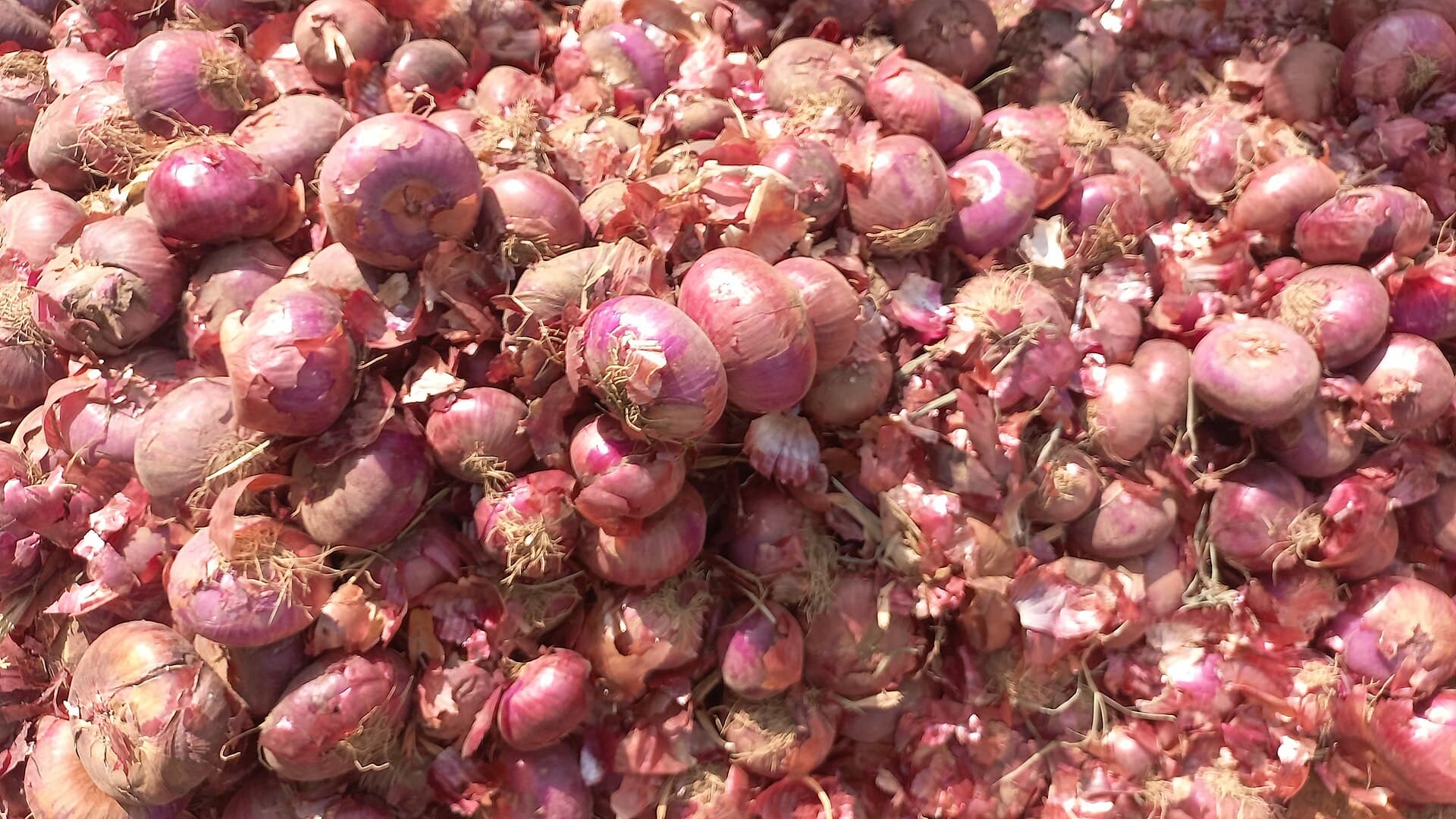
A bulb onion may grow healthy leaves yet make a small bulb if its daylight requirement does not match your latitude. Choose a cultivar for your region before starting from seed, transplants or sets. This guide is for bulb onions, Allium cepa; for bunching onions, see our scallion guide. University of Maryland Extension explains the cultivar groups.
At a glance
- Light: Full sun
- Water: Medium; keep moisture steady while leaves and bulbs grow
- Spacing in the row: 4 to 6 in (10 to 15 cm) for moderate bulbs
- Spacing between rows: 12 in (30 cm)
- Plants per square foot: 9, in an evenly spaced block for moderate bulbs
- Good neighbors, by garden tradition: Carrot, beet, brassicas, lettuce and tomato
- Keep apart, by garden tradition: Beans, peas and asparagus
When to plant
Find your area's average last spring frost through your state extension service, and watch for soil that can be worked without forming sticky clods. A hardiness zone describes winter cold for perennials; it cannot supply a planting date for onions. Illinois Extension explains the distinction. For a spring-grown crop, sow seed or plant sets early in the local spring once soil is workable. Established transplants tolerate light frost, though an overly early cold spell can encourage a flower stalk instead of a useful bulb. Short-day onions are also grown through winter in the deep South; use your local extension planting calendar for that different schedule. Minnesota Extension and Maryland Extension describe these regional choices.
Day length is the other clock. Long-day cultivars need the long days of northern summers to start bulbing; short-day cultivars bulb with shorter days and are generally grown in the South. Intermediate-day cultivars occupy the middle. Maryland Extension gives about 15 to 16 hours for its long-day examples and about 12 hours for short-day ones. Minnesota Extension gives 14 or more hours for its long-day storage onions. Those are descriptions of cultivar groups, not a universal switch: use a seed supplier's regional recommendation or your state extension's variety list. Flavor and color alone do not identify the day-length group. Maryland Extension and Minnesota Extension cover the groups.
Where and in what soil
Give onions the sunniest open bed available. They grow best in well-drained soil with plenty of organic matter. A soil test can identify whether nutrients are needed; adding fertilizer by habit can leave too much nitrogen, which Minnesota Extension associates with late maturity and bulbs that cure and store poorly. Incorporate well-finished compost if the bed needs organic matter. Avoid a site where water sits after rain. Minnesota Extension gives the soil and feeding guidance.
Leave room for frequent weeding. Onion leaves cast little shade and their roots are shallow. In a small block, moderate bulbs can be set about 4 inches (10 cm) apart each way; larger bulbs need more room. Maryland Extension distinguishes moderate from large bulb spacing.
Planting
Seed gives you the widest choice of named cultivars. Start it indoors about 8 to 12 weeks before your local outdoor planting window, or sow outdoors once soil is workable. Cover direct-sown seed with 1/4 to 1/2 inch (0.6 to 1.3 cm) of fine soil and keep the surface moist until emergence. Thin gradually, using the pulled plants as green onions, until those intended for moderate bulbs stand 4 to 6 inches (10 to 15 cm) apart. The indoor lead time differs between Maryland Extension and Minnesota Extension, so match it to your season.
Purchased transplants save indoor growing time. Set them out when local spring conditions permit, firm soil around the roots and water them in. Sets are small bulbs from the previous growing season and can also go in as soon as soil is workable; place the pointed end upward and cover it with about 1 inch (2.5 cm) of soil. Ask what cultivar or day-length type the sets are. An unlabeled bag does not tell you whether the bulbs suit your latitude. Maryland Extension covers set depth, and Minnesota Extension cautions that sets sold there are often short-day types.
Care
Keep the shallow root zone evenly moist through leaf growth and bulb enlargement. If rain falls short, water thoroughly and use a trowel to check how deeply moisture reached; sandy soil may need more frequent watering. A thin organic mulch can slow drying and suppress weeds. Stop watering as mature tops begin to fall over. Minnesota Extension describes these stages.
Pull weeds while small or cut them off with a shallow hoe. Deep cultivation can wound bulbs and roots. Do not mound soil over enlarging bulb onions: the shoulders normally show above ground, and hilling can encourage stem rot. This differs from the earthing-up used to blanch leeks. Maryland Extension explains why to leave bulb shoulders exposed.
Good neighbors, and plants to keep apart
Companion advice here is garden tradition, not dependable pest control. Gardeners commonly put onions near carrots, beets, brassicas, lettuce or tomatoes, and some advise separating them from beans, peas and asparagus. No pairing guarantees a bigger bulb or protection from an insect. Plan the bed around sunlight, water, access and each crop's mature space first. Our beet guide can help if you are growing both in one bed.
Pests and problems
Yellowing, wilting plants. Onion maggot larvae can feed inside stems and roots, but other stresses can look similar. Lift and inspect an affected plant, and ask a local extension office for identification if the cause is unclear. Minnesota Extension names onion maggot and stresses diagnosis before treatment.
Soft or decaying bulbs. Several different rots affect onions. Avoid injuring bulbs while weeding or lifting them, and cure only sound bulbs for storage. A soft neck after curing is a warning that the bulb will not keep well. Minnesota Extension lists basal, neck and soft rots.
Flower stalks or small bulbs. Early cold exposure can trigger bolting. Small bulbs can also reflect a day-length mismatch, crowding or uneven water. Check the seed packet's cultivar group and your spacing before changing the whole planting routine. Maryland Extension covers bolting and daylight; Minnesota Extension covers watering.
Harvest and storage
When roughly half the tops have fallen and begun to dry, gently undercut bulbs with a fork and lift them without bruising. The exact fraction varies by extension guide; Maryland waits for about two-thirds of dried tops. Let lifted bulbs dry in a warm, dry, well-ventilated place out of direct sun until the outer skins are papery and the necks tight. Minnesota Extension suggests two to four weeks for this cure; judge completion by the bulb rather than the calendar. Then trim or braid dry tops and keep sound bulbs in a cool, dry place where they will not freeze. Minnesota Extension and Maryland Extension provide those harvest cues.
Common questions
Why did my onion grow leaves but hardly any bulb?
First check whether its named cultivar suits your latitude. A short-day onion in a northern summer can start bulbing before it has enough leaves to support a large bulb. Crowding and water stress can also limit size. Minnesota Extension notes small northern bulbs from short-day types.
Are onion sets easier than seeds?
They are quick to plant, but they often offer less choice of named cultivar and day-length type. Seed or labeled transplants let you choose more deliberately. If you use sets, ask the seller which variety is in the bag.
Can I harvest some onions young?
Yes. Thin an overplanted row and use the young plants as green onions. Leave the final spacing for bulbs you intend to mature. These are young A. cepa, distinct from the non-bulbing A. fistulosum in our scallion guide. Maryland Extension recommends using thinnings this way.