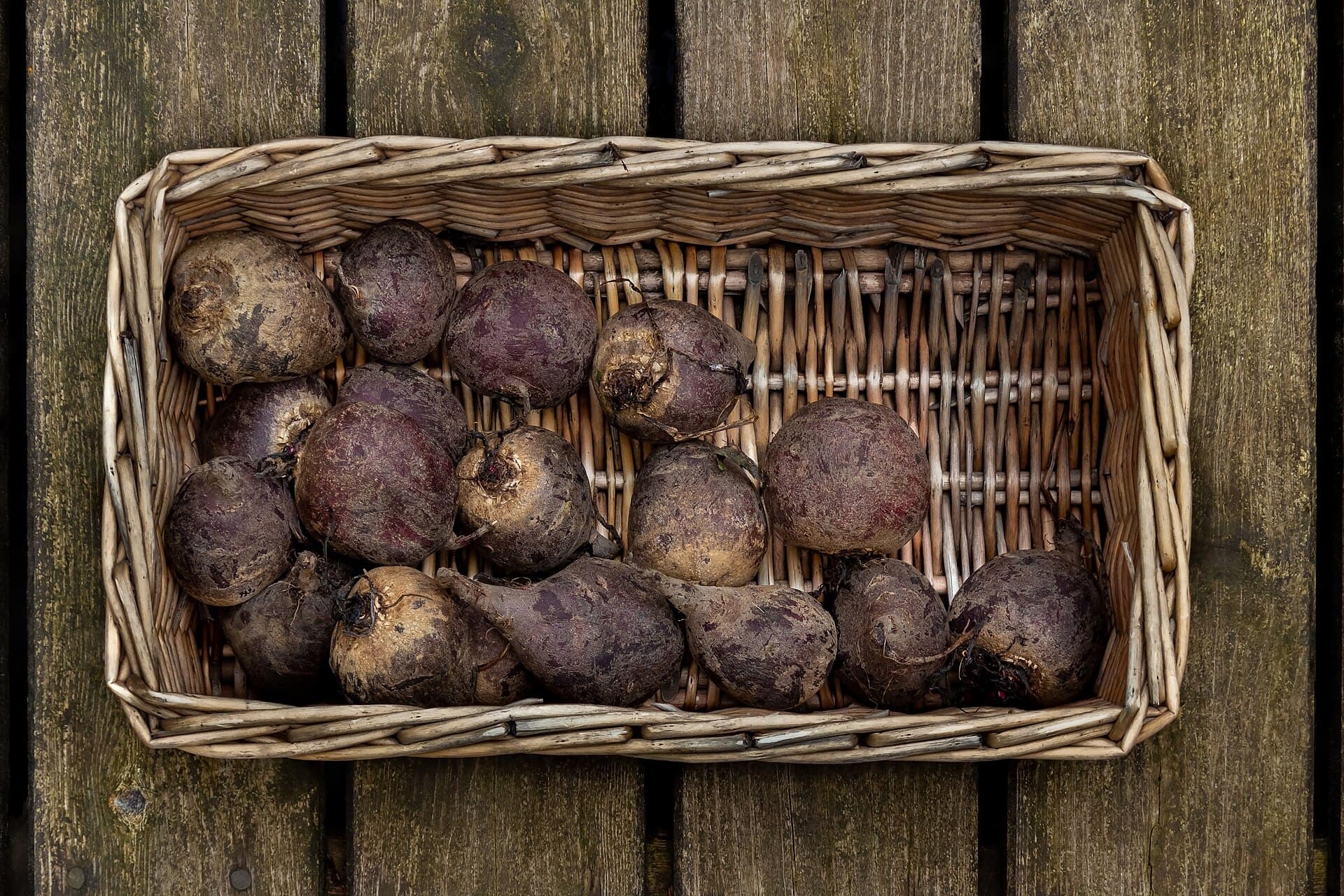
What looks like one beet seed is often a cluster that sends up several seedlings. Thin those seedlings, keep the soil moist, and you can harvest both tender roots and young greens. Red, golden, white, and striped varieties grow much the same way. University of Maryland Extension describes the seed clusters.
At a glance
- Light: Sunny site preferred; tolerates partial sun with 4 to 6 hours of direct light
- Water: Medium; keep moisture even
- Days to maturity: 50 to 70 days, depending on variety and conditions
- Spacing in the row: 3 to 4 in (8 to 10 cm), after thinning
- Spacing between rows: 12 in (30 cm)
- Plants per square foot: 9
- Good neighbors, by garden tradition: onion, brassicas, lettuce, chives, garlic, leek, scallion, shallot
- Keep apart, by garden tradition: pole beans
When to plant
Use your average last spring frost and first fall killing frost dates, which your state extension service can help you find. A hardiness zone describes winter cold for perennial plants; it does not tell you when your garden last freezes. Illinois Extension's planting guide explains both frost dates and zones.
For a spring crop, direct-sow about 2 to 3 weeks before the average last frost, when the soil is workable. Utah State University Extension gives that window and reports best germination at 55 to 75°F (13 to 24°C). For more reliable emergence, wait until the soil is consistently above 50°F (10°C), as Oregon State University Extension advises. Beet seed can germinate in cooler soil, but emergence may be slow.
For a fall crop, count back at least 6 weeks from your average first killing frost, then check the days to maturity on your seed packet. Sow earlier for full-size roots. Beets tolerate a light frost, but not a hard freeze, according to Maryland Extension. A new row every 2 to 3 weeks can spread out the harvest.
Where and in what soil
Choose a sunny bed if you have one, though beets tolerate partial sun with 4 to 6 hours of direct light. Give the roots loose, well-drained soil. Before sowing, lift compacted soil with a garden fork and rake the surface fine so seedlings can push through. In heavy ground, mix in well-finished compost. Maryland Extension covers light and seedbed preparation; Utah State University Extension describes the soil and prefers a sunny location.
Planting
Sow directly where the beets will grow. Make a shallow furrow and place seed clusters about 1 to 2 inches (2.5 to 5 cm) apart. Cover with about 1/2 inch (1 cm) of fine soil, then water gently. Leave about 12 inches (30 cm) between rows. Illinois Extension gives seed depth and close initial spacing.
Keep the seedbed evenly moist until seedlings appear, often over one to two weeks. A surface that crusts after heavy rain or dries during germination can leave gaps. Check with a finger and water lightly when the surface begins to dry, without keeping it saturated. See Illinois Extension's planting advice and its fall-crop advice.
When seedlings are about 2 inches (5 cm) tall, thin clusters so one plant remains every 3 to 4 inches (8 to 10 cm). Crowded tops can hide roots that have no room to swell. Use the tender thinnings as greens after washing them. For a square-foot bed, nine plants give each roughly 4 inches (10 cm) of space. Maryland Extension describes the thinning stage; Illinois Extension connects crowding with poor root formation.
Care
Water. Keep moisture fairly even through growth, especially during dry spells. Water the soil deeply and regularly rather than letting the bed dry hard and then flooding it. Irregular moisture can crack roots; mulch around established plants helps hold it. Utah State University Extension explains those effects.
Weeds. Pull young weeds by hand, or cultivate only the surface. Small beets compete poorly, and deep hoeing near the row can injure their roots. A light mulch beside the row can suppress new weeds once seedlings are established. Maryland Extension recommends shallow weeding and mulch.
Feeding. Beets grow best in fertile soil, but additions should follow a soil test. If it recommends fertilizer, work that into the bed before seeding, as Utah State University Extension advises.
Good neighbors, and plants to keep apart
Companion pairings for beets are garden tradition, not a reliable pest-control plan. Gardeners commonly put onions, garlic, chives, leeks, scallions, shallots, lettuce, and brassicas nearby, and some advise separating beets from pole beans. There is no reason here to promise that an onion repels an insect or that a pole bean will stunt a beet. Give each crop its own light, water, and mature spacing first. See our guides to lettuce and garlic if you are planning the same bed.
Pests and problems
Leafminers. Pale, blotchy trails in a leaf can come from larvae feeding inside it. Damaged greens are less useful; heavy feeding can also slow root development. Inspect the leaves and clip infested ones, as Utah State University Extension's leafminer guide recommends.
Tiny holes in seedlings. Flea beetles chew small holes in young leaves and can reduce a new stand, according to Utah State University Extension.
Spotted leaves or decaying roots. Leaf spots become more common when foliage stays wet; root rots can affect the stand. Water at soil level when practical, keep drainage good, and change the planting location from year to year. Utah State University Extension describes these symptoms and preventive care.
Lots of tops, little root. Check spacing first. Overcrowding is a frequent reason beet roots fail to size up. Thin promptly next time. Illinois Extension gives the diagnosis.
Harvest and storage
Start checking when the shoulders are visible. You can pull a small beet for a tender root or let it grow to about 2 inches (5 cm) across. Most varieties become more fibrous past about 3 inches (8 cm). Loosen firm soil with a fork before lifting. See Illinois Extension's size guidance and Utah State University Extension's harvest advice.
Trim the greens, leaving about 1 inch (2.5 cm) of stem, and leave the taproot intact. Greens pull moisture from a stored root, so keep them separately and use them soon. Put roots in a vented plastic bag in the refrigerator; use them while firm. Illinois Extension covers trimming and moisture loss, and Maryland Extension recommends a vented bag. Harvest fall roots before a hard freeze.
Common questions
Why did one beet seed produce several plants?
An ordinary beet seed is a dried fruit containing several embryos. Thin the cluster to one plant at the final spacing. Seed marked monogerm is an exception, but the row still needs checking for crowding. Maryland Extension explains the distinction.
Can beets grow in containers?
Yes. Choose a container with drainage and enough width for the final spacing, fill it with potting mix, and check moisture often. Illinois Extension's container guide lists beets in a two-gallon container, thinned to 2 to 3 inches (5 to 8 cm) apart. A larger container gives a beginner more room to keep moisture even.
Are beet greens edible?
Yes. Young thinnings and leaves are edible; harvest a few without stripping every leaf from roots you want to mature. Illinois Extension describes using the thinnings, and Utah State University Extension notes that young leaves can be eaten.