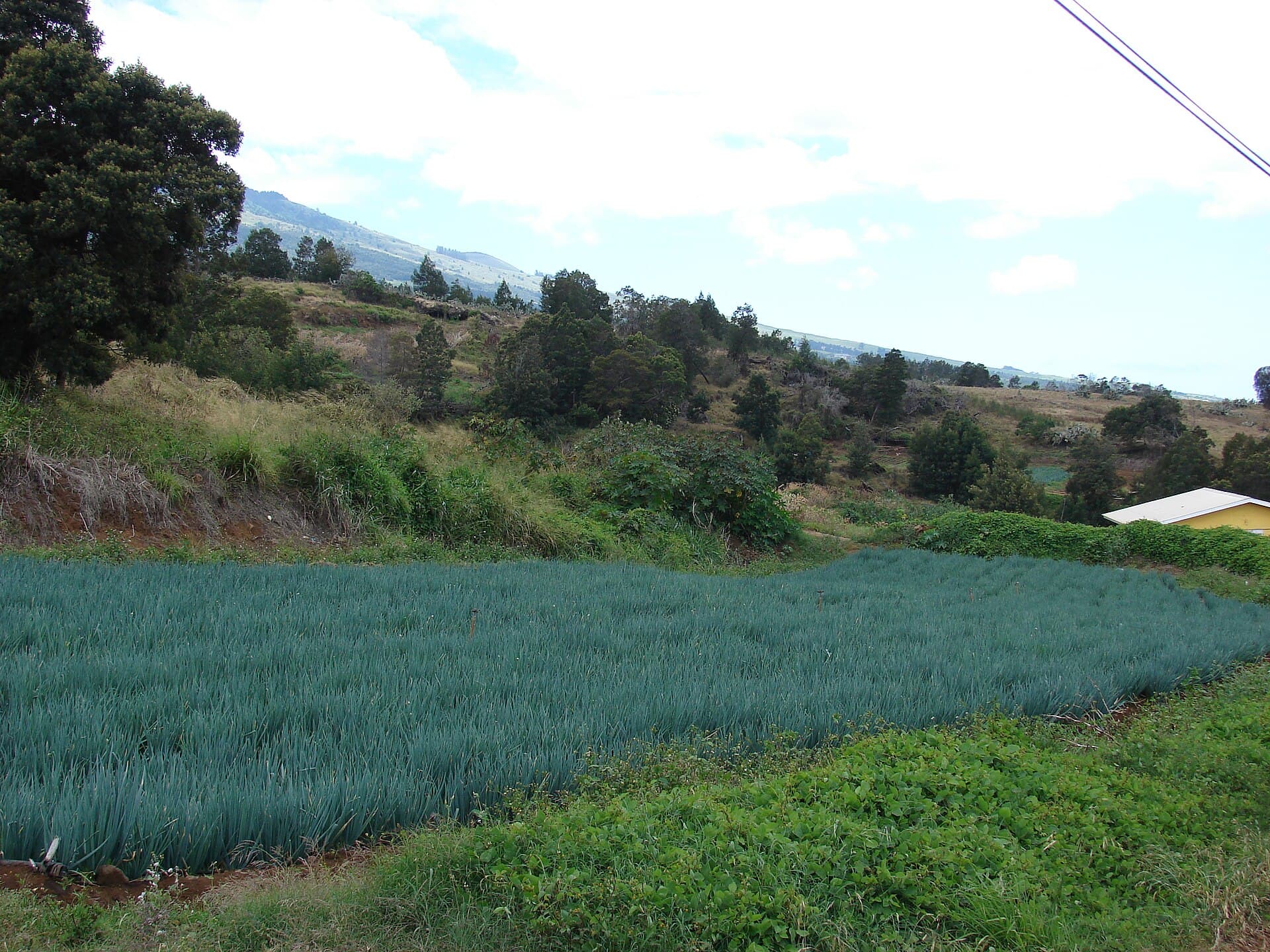
Scallions are a quick way to grow onion-flavored stalks without waiting for a storage bulb. This guide covers bunching onions, Allium fistulosum, which make green and white stalks rather than a round bulb. Gardeners also call young, pulled bulb onions (A. cepa) green onions; those are useful too, but their bulb formation and day-length choices belong to the bulb-onion guide. University of Minnesota Extension identifies bunching scallions by species and habit.
At a glance
- Light: Full sun
- Water: Medium; keep the seedbed and growing stand moist
- Spacing in the row: 2 to 3 in (5 to 8 cm) for weeding access
- Spacing between rows: 12 in (30 cm)
- Good neighbors, by garden tradition: Carrot and brassicas
- Keep apart, by garden tradition: Beans and peas
When to plant
Look up your local average last spring frost through your state extension service, then sow when the ground is workable. A hardiness zone tells you about winter low temperatures, not the date when a vegetable bed will be ready. Illinois Extension explains frost dates and zones; Minnesota Extension recommends direct sowing scallions as soon as soil can be worked.
For a later crop, compare the packet's days to usable size with your average first fall frost and the cooling trend where you garden. Green onions can tolerate light cold, but seedlings still need enough growing weather to establish. A Minnesota Extension fall-crop guide lists green onions at roughly 60 to 70 days and able to survive temperatures in the high 20s °F (around -2°C); that table uses the broad market name, so use your A. fistulosum packet for the cultivar's estimate. A small second sowing after the first stand is established can spread out your harvest, provided local conditions allow it.
Where and in what soil
Choose a sunny bed. Full sun gives onion-family crops their best growth. Prepare a fine surface so the small seeds can sit at an even depth and seedlings can emerge without pushing through a hard crust. Wait until soil is workable before sowing. Minnesota Extension gives the sun and direct-sowing guidance.
Keep the row accessible. Young scallions are narrow and do not shade out weeds, so a bed you can reach for frequent light weeding is easier to manage than a tightly packed patch. Minnesota Extension emphasizes early weed competition.
Planting
Direct-sow seed in a narrow band about 1/4 to 1/2 inch (0.6 to 1.3 cm) deep. Minnesota Extension uses a band about 2 inches (5 cm) wide and rows 12 to 18 inches (30 to 46 cm) apart. Cover lightly, water gently and keep the seedbed moist while seedlings emerge. Thin when plants are large enough to handle. Minnesota Extension thins to about 1 inch (2.5 cm) apart for a dense stand; the roomier 2 to 3 inches (5 to 8 cm) in the quick list leaves space for hand weeding. Minnesota Extension gives the close-row method.
Transplants offer an earlier harvest when outdoor conditions delay sowing. Start seed indoors about four weeks before your intended outdoor planting date. Keep the seed mix moist and seedlings in bright light. When the bed is ready, separate the plants gently, place them in a shallow furrow and water them in. Minnesota Extension spaces transplants about 1 inch (2.5 cm) apart for a dense stand; leave more space if you want easier access for weeding and pulling. Do not use bulb-onion sets as though they were seed of A. fistulosum: sets are small A. cepa bulbs. Minnesota Extension covers transplanting; Maryland Extension describes sets.
Care
Keep moisture steady. If rain is scarce, water the soil thoroughly, then use a trowel to check whether it reached below the surface. Sandy beds dry faster and may need more frequent attention. Avoid leaving roots in soggy soil; check before adding more water. Minnesota Extension recommends a thorough watering when rainfall is short and checking depth rather than wetting only the surface.
Weed gently and often while scallions are small. Pull competitors by hand, taking care not to uproot the crop. As the stand fills in, weeds usually become less competitive. Minnesota Extension describes the changing weed pressure.
Good neighbors, and plants to keep apart
Gardeners report planting scallions near carrots and brassicas; some advise separating them from beans and peas. These pairings are traditions, not reliable insect control. Give the crops their own light, water and root space instead of depending on a neighbor to protect them. For example, a row beside carrots still needs enough room for thinning and harvesting both crops.
Pests and problems
Yellow or wilted stalks. Onion maggot larvae can bore into stems, causing yellowing and collapse. Lift a damaged plant and inspect its base rather than assuming every yellow leaf has the same cause. Your local extension service can help identify a recurring problem. Minnesota Extension identifies the maggot symptom.
Soft bases or decaying plants. Several rots can affect scallions, including basal and bacterial soft rot. Confirm the cause before changing how you care for the bed. Minnesota Extension lists these diseases.
Thin, slow stalks. Look first for weed competition, dry soil or a stand thinned too late. A seedling wedged among weeds receives less light and moisture. Correct the growing conditions and check the next sowing's spacing. Minnesota Extension stresses early weeding and adequate moisture.
Harvest and storage
Pull bunching scallions once the stalks are large enough for your use; there is no bulb shoulder or fallen top to wait for. Loosen firm soil first with a trowel so the stalk does not snap at ground level. Harvest the largest plants and let the remaining stand grow. Minnesota Extension gives usable size rather than a fixed diameter as the harvest cue. Minnesota Extension
Refrigerate freshly pulled scallions and use them while crisp; Utah State University Extension distinguishes their storage from that of dry bulb onions. Rinse stalks before use. Plan another sowing if you want a later harvest.
Common questions
Do scallions form bulbs if I leave them longer?
True bunching scallions, A. fistulosum, do not form the rounded storage bulb of A. cepa. Check the seed packet if the label says only “green onion,” since that common name can also refer to young bulb onions. Minnesota Extension makes this species distinction.
How close can I sow them?
Minnesota Extension thins a dense row to about 1 inch (2.5 cm) between plants. The roomier 2 to 3 inches (5 to 8 cm) in this guide is a layout choice for weeding and pulling individual scallions. Minnesota Extension provides the close-row method.
Can I grow scallions from onion sets?
Sets grow young bulb onions, A. cepa, that you can harvest green. For the bunching species in this guide, buy seed or transplants labeled Allium fistulosum. Maryland Extension defines sets as small bulbs; Minnesota Extension covers bunching scallion seed and transplants.