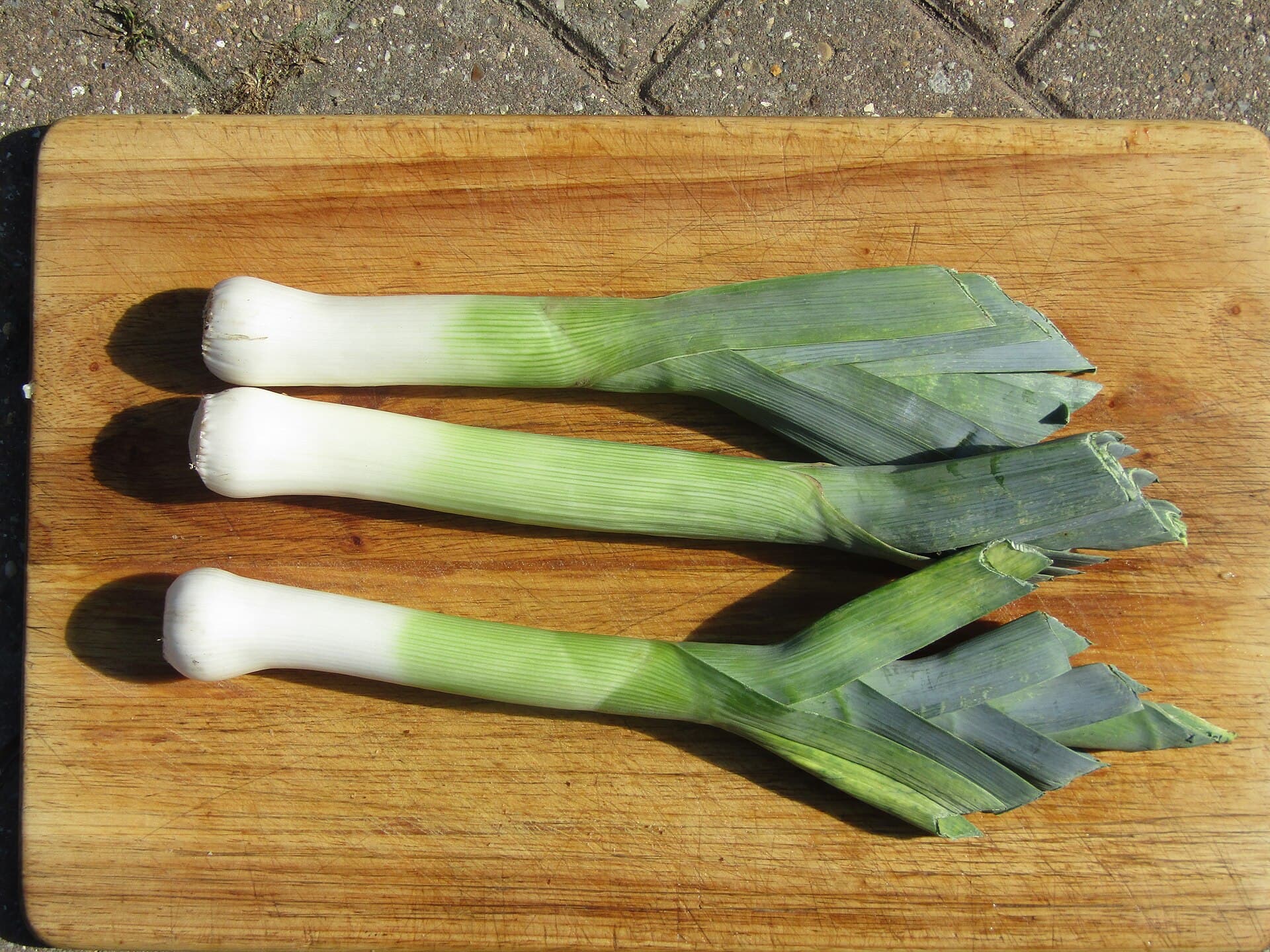
Leeks make a long, mild-tasting shaft instead of a round bulb. They grow slowly at first, so transplants give them time to develop. Gradually bringing soil up around the lower shaft keeps it pale; steady water supports growth. University of Minnesota Extension describes both methods.
At a glance
- Light: Full sun
- Water: Medium; keep the shallow root zone consistently moist
- Spacing in the row: 6 in (15 cm)
- Spacing between rows: 12 in (30 cm)
- Good neighbors, by garden tradition: Carrot, celery and onion
- Keep apart, by garden tradition: Beans and peas
When to plant
Find your average last spring frost through your state extension service and plan from your local spring conditions, not a hardiness-zone month. Zones describe winter lows for perennial survival, while frost dates and soil workability guide vegetable planting. Illinois Extension explains the difference.
Start leek seed indoors early enough to have sturdy transplants when the garden is workable and daytime temperatures have settled near 45°F (7°C). Minnesota Extension allows seedlings up to 10 to 15 weeks old at setting out, while Utah State University Extension describes transplants raised for 6 to 8 weeks. Choose a schedule for your climate and cultivar rather than treating either interval as a universal deadline. Harden seedlings off gradually for about a week before planting outdoors. Minnesota Extension gives the temperature and acclimation guidance.
Check the packet's maturity estimate when planning a fall harvest. Minnesota Extension says many leeks need about 120 to 150 days and some newer cultivars as few as 90; Utah State says leeks generally take 100 to 120 days from seeding. The guides differ, and a transplant's date in the ground is not the same as its sowing date. In a short season, choose an early cultivar. Many leeks tolerate the first light frosts, so the first frost is not automatically the end of harvest. Minnesota Extension and Utah State University Extension give those ranges.
Where and in what soil
Choose a sunny, well-drained bed. Minnesota Extension calls for at least eight hours of bright light daily. Leeks do best in fertile soil rich in organic matter; a soil test can guide feeding. Incorporate finished compost if needed, then break clods so transplant roots make good contact. Minnesota Extension and Utah State University Extension cover site preparation.
Leeks can grow closer than 6 inches (15 cm), but more room helps with weeding and lifting. Use the packet and your bed's layout while keeping access for blanching. Minnesota Extension gives 2 to 6 inches in the row, and Utah State University Extension gives 4 to 6 inches after thinning.
Planting
Sow seeds indoors about 1/4 to 1/2 inch (0.6 to 1.3 cm) deep. Keep the mix moist and seedlings in bright light. When outdoor conditions suit, separate them gently and transplant at final spacing. If you direct-sow in a long cool season, thin emerged plants. Utah State University Extension gives seed depth and thinning range.
For a longer white shaft, set transplants at the bottom of a furrow about 6 inches (15 cm) deep. Water them in, then gradually fill the furrow as they grow, keeping loose soil below the point where leaves branch. Another method is to plant at ordinary soil level and mound soil or finished compost around the lower stems in stages. Do not bury the green leaves or heap soil into their folds. Blanching changes the shaft's color; it does not turn a leek into a bulb onion. Minnesota Extension and Utah State University Extension describe furrowing and hilling.
Care
Water deeply enough to moisten the shallow root zone, then check the soil rather than relying on a fixed calendar. Dry spells reduce growth and quality; waterlogged soil favors disease. Direct water to the soil when practical, and use a trowel to see whether moisture reached below the surface. Sandy beds may need shorter intervals between waterings. Minnesota Extension gives those checks.
Weed often while plants are young. Their early growth is slow, and a deep hoe can injure the fibrous roots. Pull weeds or cultivate only the surface; organic mulch can hold moisture and make later weeding easier. Follow soil-test advice for nutrients, as leeks need fertility but the amount to add depends on the bed. Utah State University Extension particularly notes competition during the first two months.
Good neighbors, and plants to keep apart
Gardeners report growing leeks beside carrots, celery and bulb onions, and some advise keeping them apart from beans and peas. These are traditions, not a proven way to prevent pests or guarantee yield. Give each crop its own light, water and mature spacing. If you place leeks next to carrots, keep enough access to lift the roots without damaging the leek shafts.
Pests and problems
Yellow, wilting plants. Onion maggot larvae can bore into alliums, including leeks. Lift an affected plant to inspect the roots and stem, and consult local extension guidance before deciding on a response; wilting alone does not identify the cause. Minnesota Extension describes the symptom.
Silvery, twisted leaves. Thrips are tiny insects that feed on leek leaves and can leave gray or silver damage. Examine the leaf folds closely. Utah State University Extension lists these signs; different stresses can discolor leaves, so confirm the insect before acting.
Short pale shaft. A leek's white portion depends partly on how much of the lower stem was shaded as it grew. Start blanching gradually while the plant is still developing. A short shaft is still usable; do not bury leaves in a late attempt to lengthen it. Minnesota Extension explains the purpose of furrows and hills.
Harvest and storage
Check the cultivar's expected shaft width; many full-size leeks reach about 1 inch (2.5 cm) across, while smaller varieties are ready sooner. Unlike bulb onions, leek leaves do not flop over to signal ripeness. Loosen the soil with a fork and lift the plant, keeping the shaft intact. You can harvest usable smaller leeks earlier if you need the space. Minnesota Extension gives the visual cues.
Some cultivars can remain in a mulched bed after the first frosts, but cold tolerance and winter soil conditions vary. Lift them before the ground freezes hard enough that you cannot dig, or follow local extension guidance for an outdoor winter harvest. Soil often hides between the leaves, so split and rinse them thoroughly before cooking. Keep harvested leeks cool and humid for short-term use; unlike cured bulb onions, they are a fresh vegetable. Minnesota Extension explains frost tolerance and cleaning; Utah State University Extension describes cold, humid storage.
Common questions
Are leeks just oversized scallions?
No. Leeks are Allium ampeloprasum with thick, flat, folded leaves and a substantial shaft. Bunching scallions are A. fistulosum with slimmer stalks. They can look similar when young but are different crops. Minnesota Extension describes the leek's form.
Do I have to blanch the shaft?
No. Hilling or gradually filling a furrow lengthens the pale portion, but the green leaves are edible too. Avoid trapping grit inside leaf folds when you add soil. Minnesota Extension describes both edible portions.
Can I harvest leeks after a frost?
Often, yes. They tolerate the first frosts better than many vegetables, but the cultivar and local winter determine how long they can remain in the bed. Mulch can protect the planting; check whether the soil remains diggable. Minnesota Extension gives this qualified guidance.