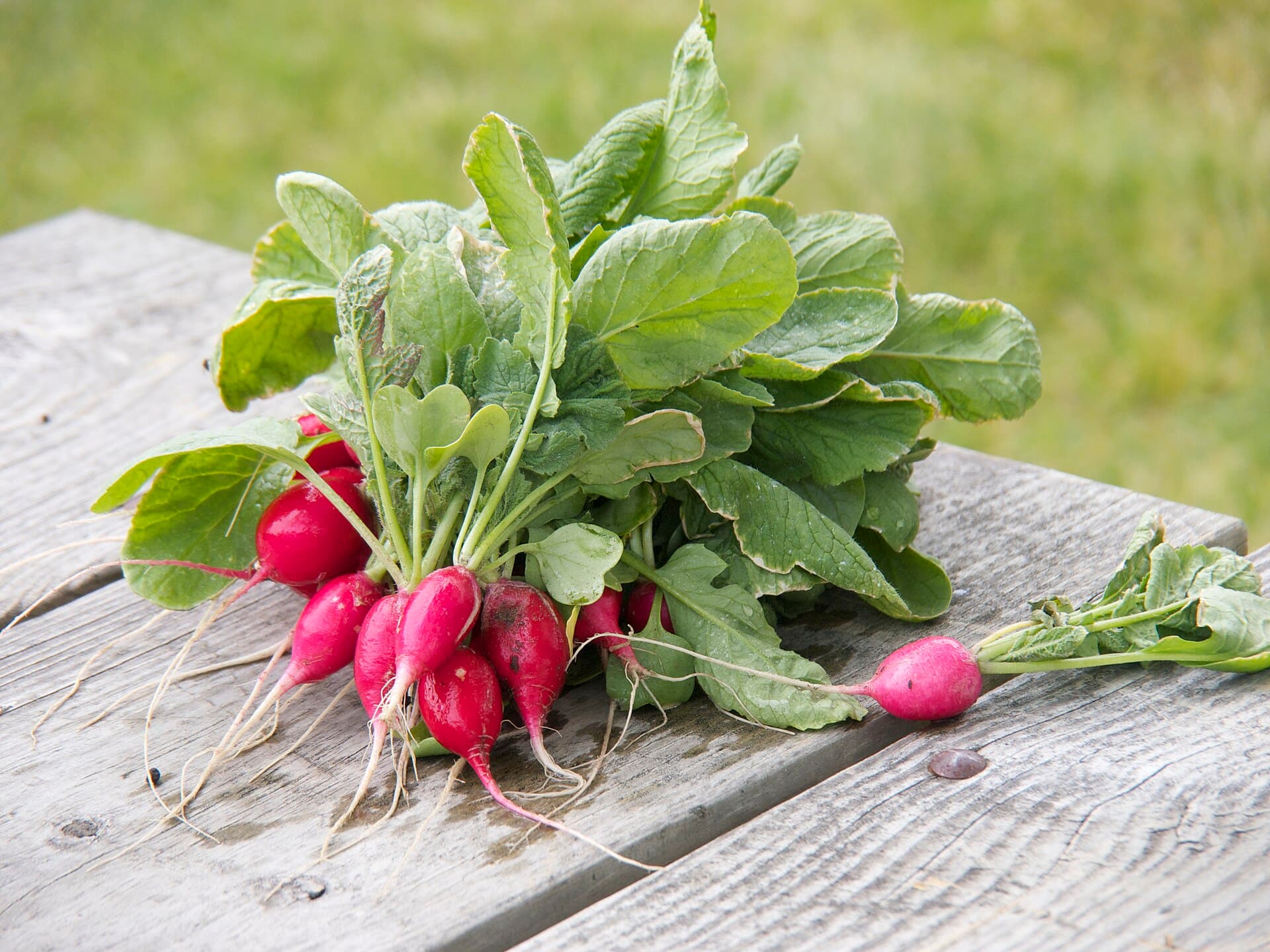
Radishes reward a small sowing and a quick check of the roots. The round or short spring kinds can be ready in weeks, while winter radishes and long daikon take longer and need more space. Choose the type before preparing the bed: one planting distance and harvest cue will not suit both. Cool weather, loose soil and steady moisture help the roots grow without turning tough. University of Minnesota Extension describes the different types.
At a glance
- Water: Medium; keep the soil evenly moist
- Spacing for small spring types: 2 to 3 in (5 to 8 cm) between plants after thinning
- Plants per square foot for small spring types: 16 in an intensive bed
- Good neighbors gardeners suggest: lettuce, cucumber and peas
- Keep apart, according to garden tradition: hyssop
These figures describe small spring radishes. Follow the seed packet's spacing and maturity estimate for larger types.
When to plant
Find your average last spring frost and first fall frost dates through your state's extension service. A hardiness zone describes winter lows; it does not tell you when your bed is ready. For a spring crop, sow directly as soon as the soil is workable, even if your last spring frost is still ahead: radishes tolerate frost. A soil thermometer can help; Minnesota Extension includes radish among crops that can be sown when soil is 40 to 50°F (4 to 10°C). Hot weather can make spring roots woody or sharp-tasting, according to Maryland Extension.
For a continued spring harvest, sow a short row every 10 to 14 days. Sow spring varieties again when late-summer weather cools. Winter radishes are generally sown in midsummer to late summer for a fall crop, and daikon is commonly grown for late-fall harvest. Illinois Extension distinguishes these planting seasons and growth rates. Count backward from your local first fall frost using the days to maturity on your seed packet; Minnesota Extension explains this planning step.
Where and in what soil
Choose a sunny bed. Maryland Extension recommends at least 6 hours of direct sun and prefers 8 to 10; too much shade can leave you with leaves and little root. Soil should drain well and stay loose. Work it at least 6 in (15 cm) deep for small radishes and 12 in (30 cm) or more for long daikon. In stony or heavy soil, choose a short-rooted variety or prepare a deep raised bed. A soil pH of 6 to 7 is suitable. Mix in well-rotted compost if needed; avoid fresh manure, which can encourage branched roots. These soil recommendations come from Minnesota Extension.
Planting
Sow where the radishes will grow. Space seeds about 1 in (2.5 cm) apart. Cover small spring seeds with 1/4 to 1/2 in (6 to 13 mm) of soil; larger varieties can be sown as deep as 1 in (2.5 cm). Keep the surface moist while they emerge, usually within 10 days. If rain or watering leaves a crust, moisten it gently so seedlings can push through. Minnesota Extension gives these sowing and crusting recommendations.
Thin small radishes promptly, leaving roughly 2 to 3 in (5 to 8 cm) in a wide bed. That spacing is compatible with 16 small plants per square foot in an intensive layout. For a conventional row, follow the seed packet. Give large daikon about 4 to 6 in (10 to 15 cm) between roots, or more if the variety calls for it. Crowding can prevent good root development. Minnesota Extension gives daikon spacing; Illinois Extension distinguishes bed and row spacing.
Care
Water. Keep the bed evenly moist, never waterlogged. Minnesota Extension advises a thorough watering when the planting gets less than about 1 in (2.5 cm) of rain in a week; sandy soil may need water more often. Check below the surface with a trowel. Drought stress can toughen roots, and uneven moisture can split them.
Weed and feed. Pull weeds while small, especially around daikon, and cultivate shallowly to avoid nicking roots. Radishes have low fertilizer needs; excess nitrogen encourages leaves at the expense of roots. Use a soil test to guide feeding. Minnesota Extension covers weeding; Maryland Extension cautions against excess nitrogen.
Good neighbors, and plants to keep apart
Most companion advice for radishes is garden tradition rather than tested pest control. Lettuce, cucumbers and peas are traditional neighbors, while gardeners advise keeping hyssop apart.
For a useful arrangement, sow a few quick radishes in a slow-germinating carrot row to mark it, then pull them before the carrots need the space. Maryland Extension describes this row-marking use.
Pests and problems
Small holes in leaves. Flea beetles chew round holes, especially on young spring plants. Check new seedlings before deciding what to do; leaf holes alone do not mean the root is lost. Minnesota Extension describes this damage.
Tunnels in roots. Cabbage maggots and wireworms can both make tunnels. Inspect a damaged root for larvae and ask your local extension service to help identify the cause before choosing a response. Minnesota Extension describes both pests.
Leaves but little root. Check for crowding, heat or deep shade, which Illinois Extension identifies as causes. Excess nitrogen can also favor leaves over roots, according to Maryland Extension.
Cracked or harsh roots. Uneven water can split roots; slow growth or a late harvest can make them hot and woody. Water consistently and harvest small types promptly. Illinois Extension explains both symptoms.
Harvest and storage
Begin checking small spring radishes about three weeks after sowing. Brush soil from a shoulder and pull when the root is around 1 in (2.5 cm) across, depending on the variety. Larger spring roots can turn pithy quickly. Minnesota Extension gives a three-to-five-week window; Maryland Extension gives the approximate one-inch cue.
Let winter radishes reach the size described on their seed packet. Their cool-weather harvest window is longer than a spring radish's, but dig before the ground freezes. Illinois Extension describes that longer window. For long daikon, slip a fork or spade under the root before lifting so it does not snap. Remove the greens and refrigerate roots promptly. Minnesota Extension recommends lifting daikon from underneath. Use spring roots soon: refrigerator keeping estimates vary among extension guides, but the roots lose moisture with time.
Common questions
Why did my radishes grow only leaves?
Crowding, hot weather, deep shade and excess nitrogen can all favor tops over roots. Thin early, grow spring varieties in cool weather and avoid unnecessary fertilizer. Illinois Extension and Maryland Extension describe these causes.
Are daikon just oversized spring radishes?
No. Daikon is a long-rooted radish commonly grown toward a late-fall harvest. It needs deeper prepared soil and wider spacing, and its mature size depends on the variety. Minnesota Extension describes these differences.