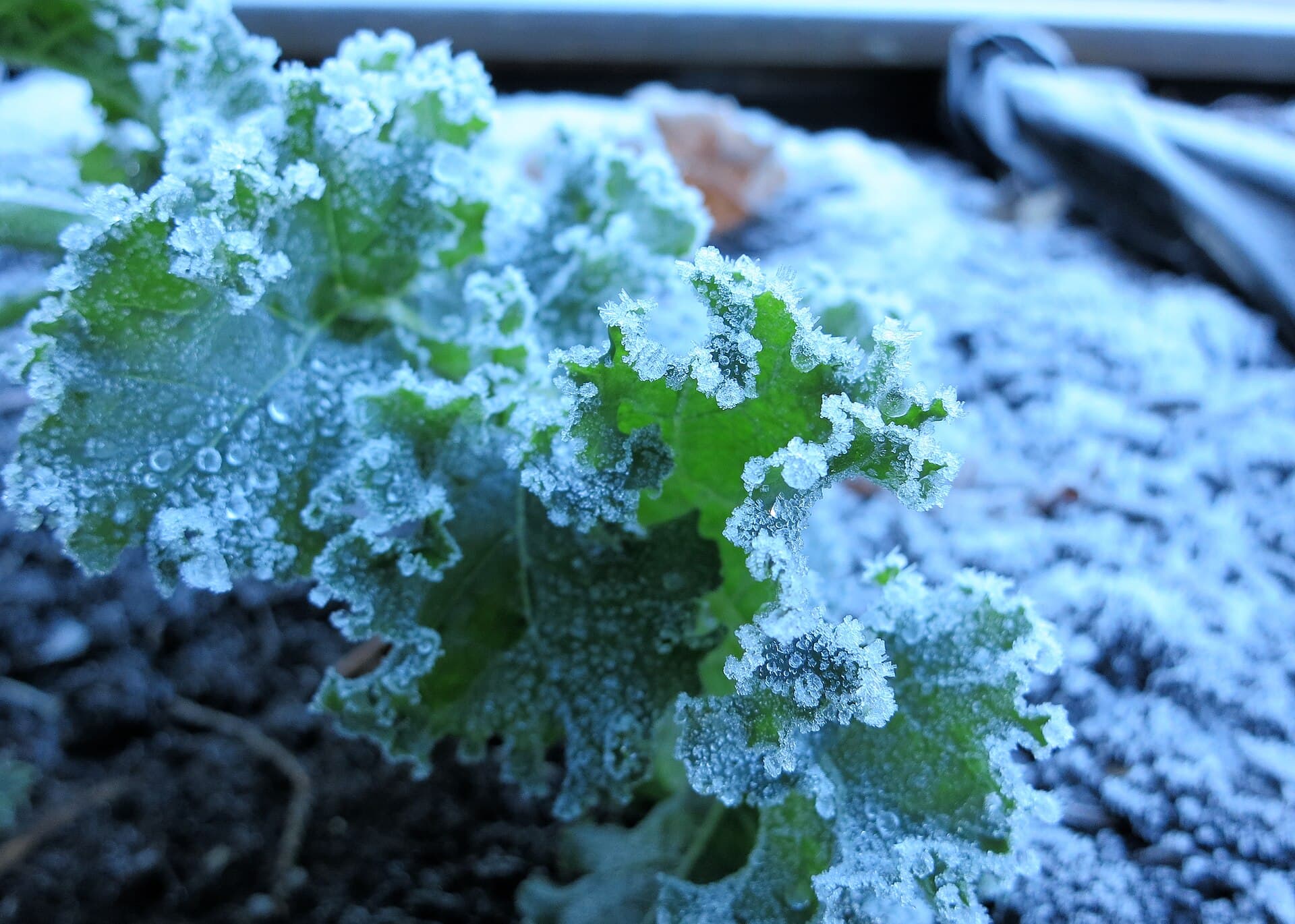
Kale is a leafy brassica you can start from seed or a transplant and harvest one outer leaf at a time. It grows best through cool weather, so a spring or fall crop is often easier to keep tender than one maturing in summer heat. Check the seed packet for your cultivar’s maturity time. Utah State University Extension describes those varieties and the crop's growing conditions.
At a glance
- Light: Partial sun is tolerated; choose a sunny site where possible.
- Water: Medium; keep soil moisture even.
- Days to maturity: 50 to 65 days, depending on cultivar and conditions.
- Spacing in the row: 12 to 18 in (30 to 46 cm) for full-size plants.
- Good neighbors, by garden tradition: Beets, onion, nasturtium, marigold.
- Keep apart, by garden tradition: Strawberry.
When to plant
Find your average last spring frost and first fall frost dates through your state's extension service. Those local dates, the state of your soil, and your cultivar's maturity time are more useful than a hardiness-zone month. For a spring crop, sow outdoors when the soil can be worked, around 3 to 4 weeks before the average last frost, or set out young transplants in that period. Maryland Extension gives the spring sowing window; Utah State Extension describes setting out transplants about 4 to 5 weeks before the last frost. Wait if the ground is frozen or waterlogged.
For fall, count back from your average first frost using the seed packet's maturity estimate, then add 10 to 14 days for shortening daylight. That is Maryland Extension's fall-planning method. A fall frost can improve flavor. Establish plants before cold slows their growth; winter survival depends on the climate, cultivar and protection.
Where and in what soil
Give kale a fertile, well-drained bed with plenty of light. It tolerates partial shade with roughly 4 to 6 hours of direct sun, though a sunnier place is preferable for vigorous growth. Work finished compost into the bed before planting, especially if the soil is poor, and use a soil test to decide whether extra fertilizer is needed. Avoid guessing a large fertilizer dose: a test can identify what the bed actually lacks. Maryland Extension covers the light range; Utah State Extension recommends soil testing and good drainage.
Leave room to reach the outer leaves. For small salad leaves, sow more densely and harvest young plants rather than growing a few large ones. Maryland Extension describes the full-size and baby-leaf methods.
Planting
For direct sowing, place seed 1/4 to 1/2 inch (0.6 to 1.3 cm) deep in a prepared seedbed. Keep the surface gently moist while seedlings establish. When they have three or four true leaves, thin to about 12 to 18 inches (30 to 46 cm) between full-size plants. Utah State's planting advice uses 12 inches (30 cm) between plants and 2 feet (61 cm) between rows; Maryland allows 12 to 24 inches (30 to 61 cm) between plants and wider rows for large plants. Choose a layout that gives your selected cultivar room and lets you reach the leaves. Utah State Extension and Maryland Extension give those distinct row plans.
For an earlier harvest, use sturdy transplants with several mature leaves and established roots. Set them at the final spacing, water them in, and check soil moisture during their first days outside. Seedlings removed while thinning can also fill a gap elsewhere if you lift them with roots intact. Utah State Extension describes transplant readiness and thinning.
Care
Water steadily. Check beneath the surface rather than watering by habit. Water deeply during dry periods, then let excess drain; keep moisture reasonably even as new leaves expand. Utah State gives about 1 to 2 inches (2.5 to 5 cm) of water per week as a guide, adjusted for rain, soil and temperature. Big swings in moisture can make leaves tough or off-flavored. Utah State Extension explains its watering advice.
Mulch and weed. Pull small weeds before they compete with the seedlings. Once plants are established, a layer of organic mulch helps conserve moisture and keeps soil cooler during warm spells. Keep mulch away from the stem and cultivate shallowly so you do not injure roots. Utah State Extension covers both practices.
Watch the weather. Growth and leaf quality decline in high summer heat. If a spring stand becomes bitter or slows sharply, a new fall planting may be more productive than trying to keep it going indefinitely. Frost may sweeten an established fall crop, but check leaves after a hard freeze and take only sound ones. Utah State Extension describes heat and frost effects.
Good neighbors, and plants to keep apart
Some gardeners place kale near beets, onion, nasturtium or marigold, and some separate it from strawberries. These are traditional pairings, not a tested way to prevent a pest or guarantee a larger kale harvest. Let light, access, soil moisture and each plant's final size determine the layout. For kale's close brassica relatives, see the broccoli guide.
Pests and problems
Chewed leaves. Cabbageworms and loopers leave holes and may hide among the leaves. Look on both sides of damaged foliage for green caterpillars before removing them by hand, as Minnesota Extension recommends. Small, scattered holes in young seedlings can instead be flea beetle feeding; a lightweight row cover installed early can keep insects off a new planting. Utah State Extension identifies both pests and describes covers for protection.
Curled leaves and clusters of insects. Aphids may gather beneath leaves and distort new growth. Inspect the underside and use a firm stream of water to dislodge them if needed. A few damaged leaves do not require removing the whole plant. Utah State Extension describes the insects and signs.
Slow growth or tough leaves. Check soil moisture, weed pressure and heat before adding fertilizer. Kale needs fertile soil, but water stress and high temperatures also lower quality. A soil test can guide feeding. Utah State Extension connects those conditions with growth and flavor.
Harvest and storage
Pick outer leaves when they reach a useful size, leaving the small center leaves and growing point to make the next harvest. Harvest regularly before old leaves yellow or turn coarse. Young leaves can be picked before the packet's full-size maturity date. Maryland Extension describes young-leaf and outer-leaf harvests, and Utah State Extension recommends taking older leaves first.
Cool leaves promptly after picking and refrigerate them. A fall planting may keep making usable leaves after a frost, but the length of that harvest depends on your winter and any cover. Inspect leaves before eating, and do not count on an unprotected plant as a year-round crop. Utah State Extension describes cold-season harvest and cool storage.
Common questions
Can I grow kale for baby leaves?
Yes. Sow closer than you would for mature plants and harvest the small leaves while tender. Maryland Extension describes spacing of roughly 2 to 4 inches (5 to 10 cm) for a dense baby-leaf planting; use wider spacing if you plan to keep individual plants for large leaves. Maryland Extension explains the difference.
Will kale survive a frost?
Established kale tolerates substantial cold, and fall frost can improve its flavor. Winter survival depends on climate and protection. Maryland Extension describes kale as hardy in spring and fall.
Should I harvest the whole plant or individual leaves?
Either works, but picking outer leaves lets the center continue growing. Harvest the whole plant when clearing the bed. Maryland Extension describes both options.