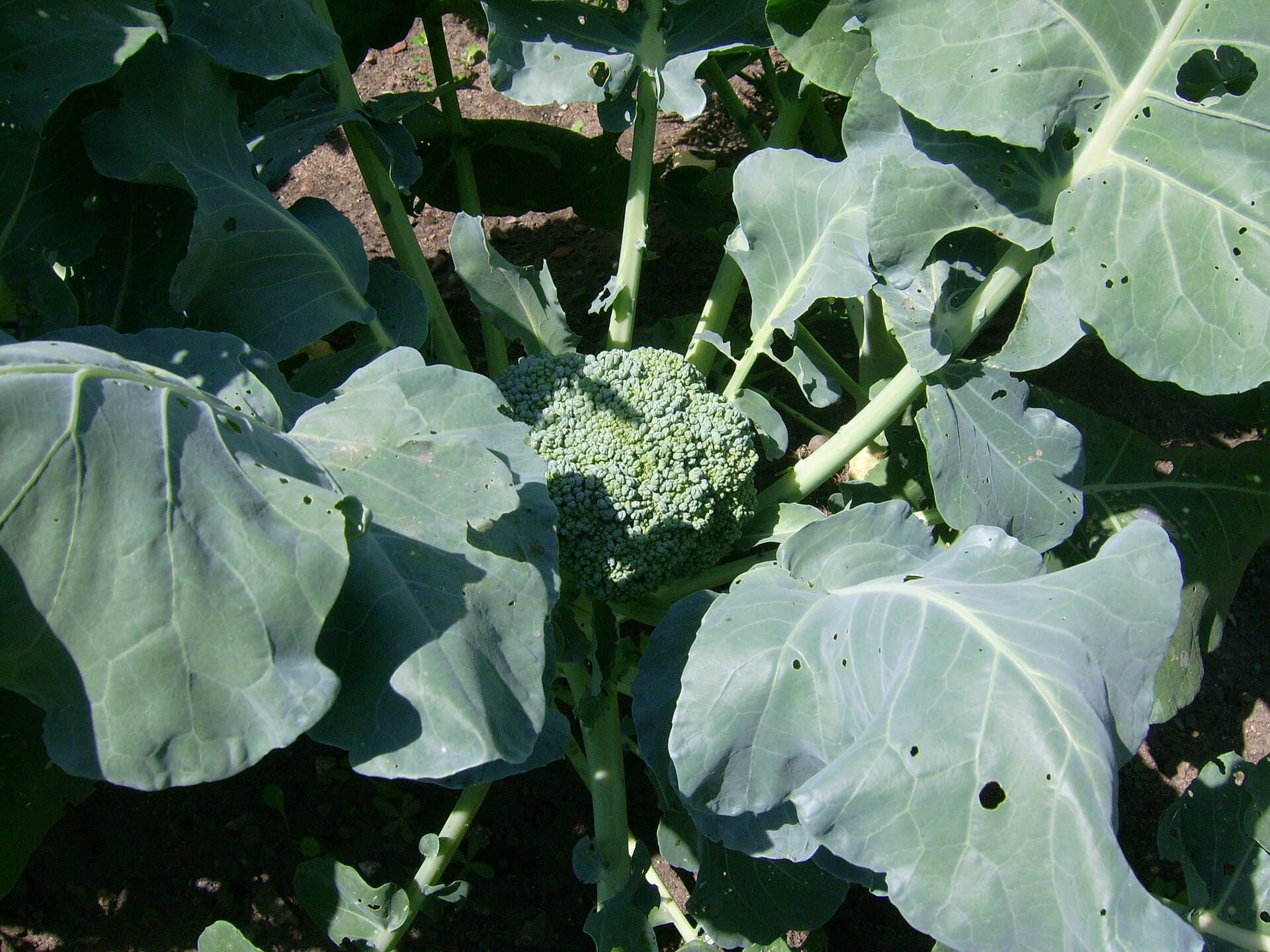
Broccoli rewards a gardener who watches the buds rather than the calendar. The familiar heading type makes a central cluster of unopened flower buds; after you cut it, smaller side shoots may follow. Sprouting types make many small shoots instead of one large head, and broccoli raab is a different crop. University of Maryland Extension describes these forms.
At a glance
- Light: Full sun, at least 6 hours of direct light; 8 to 10 preferred.
- Water: Medium; keep the root zone moist and water regularly during dry spells.
- Good neighbors, by garden tradition: Onion, dill and nasturtium.
- Keep apart, by garden tradition: Strawberry and tomato.
When to plant
Find your average last spring frost and first fall frost dates through your state extension service. These dates describe your growing season more usefully than a hardiness zone. Illinois Extension notes that planting also depends on how long the chosen crop takes to mature. Broccoli forms its best heads in cool weather, so plan for a spring crop that finishes before sustained heat or a fall crop whose heads develop as temperatures cool.
For spring heading broccoli, start seed indoors and set out sturdy, hardened transplants. Maryland Extension uses five- to seven-week-old transplants about four weeks before the local last frost. That is a regional guide, not a promise that an exposed young plant will be unharmed by every cold spell: temperatures below 45°F (7°C) may disrupt heading or encourage premature flowering. Check the forecast and protect young plants when needed. Spring transplanting gives the plant a head start before hot weather arrives.
For a fall crop, count backward from your local first frost using the seed packet's maturity period and the weeks needed to raise a transplant. Maryland reports that fall transplants take about four to six weeks to grow from seed, and that fall broccoli can take longer to mature than its stated 55 to 65 days from transplanting. Direct seeding is also possible for fall where there is enough time. Direct seeding also needs time for seedling growth before head formation. Maryland Extension gives the transplant and fall-crop distinctions.
Where and in what soil
Choose a sunny, accessible bed with drainage and enough room to check the heads often. Broccoli needs at least six hours of direct light, and Maryland prefers eight to ten. Give it fertile soil; the crop has a high nutrient demand, supplied by soil organic matter or fertilizer guided by a soil test. Add finished compost if the soil needs organic matter, and avoid treating the entire garden as if it needs the same feed. Maryland Extension provides the light and fertility guidance.
Choose a bed that has not recently held another cabbage-family plant. Broccoli, cabbage and cauliflower share several pests. Minnesota Extension advises leaving four years between related crops in the same place. Use that as a planning goal where garden space permits.
Planting
Start seed indoors for a spring crop, pressing seed 1/4 to 1/2 inch (6 to 13 mm) deep into clean seed-starting mix. Minnesota Extension gives this depth. Harden the young plants by gradually exposing them to outdoor light and wind before transplanting. Set each at the depth it occupied in its pot and water it in well. For conventional rows, Maryland gives 16 to 24 inches (41 to 61 cm) between plants and 24 to 30 inches (61 to 76 cm) between rows; the correct choice depends on cultivar and how much access you need. Follow the packet for your selected heading or sprouting type. Maryland Extension gives the spacing range; Minnesota Extension recommends hardening transplants to reduce stress.
If direct sowing for fall, place seed 1/4 to 1/2 inch (6 to 13 mm) deep, keep the seedbed moist during emergence, and thin seedlings to the final spacing on the packet. Minnesota Extension gives that sowing depth. Young plants have a longer period exposed to heat, wind and insects than transplants. A lightweight row cover placed at sowing or transplanting can protect them from moths, provided its edges are secured. Minnesota Extension's caterpillar guide explains that covers keep adult butterflies and moths from laying eggs on the crop.
Care
Water steadily. Keep the root zone moist with deep watering during dry weather; check more often once heads begin forming. A mulch can slow moisture loss and suppress weeds. Broccoli has shallow, fibrous roots, so pull small weeds or cultivate lightly rather than working a hoe deeply beside the stem. Maryland Extension gives these watering and weeding precautions.
Feed according to need. A soil test is a useful starting point for a hungry crop. Maryland recommends feeding at transplanting and again about three weeks later, then after the central head is cut if you want side shoots. Maryland Extension describes the sequence.
Watch the weather and plant size. A small, early head on a plant that never made many leaves is sometimes called buttoning. A long cold spell, water or nutrient stress, insect injury, or an overaged transplant can bring on early head formation. Keep growth steady and avoid holding transplants indoors too long. Minnesota Extension explains the problem.
Good neighbors, and plants to keep apart
Gardeners traditionally place onion, dill or nasturtium near broccoli and sometimes separate it from strawberry or tomato. Treat these pairings as optional layout preferences. Keep the more dependable priorities first: sun, airflow, room for mature leaves and access to harvest. Tomatoes need a different warm-season schedule.
Pests and problems
Small holes or ragged chewing on leaves deserve a closer look. Imported cabbageworm, cabbage looper and diamondback moth larvae all feed on broccoli. Check both sides of leaves at least weekly after planting, then more often as heads develop. Larger caterpillars may move toward the center and leave droppings among the buds. Handpick visible caterpillars and use a well-secured row cover early, before egg-laying adults reach the plants. Minnesota Extension describes the damage and physical controls. Maryland also lists flea beetles and harlequin bugs among broccoli problems; identify the culprit before acting.
Harvest and storage
Cut the central head when its buds are tight and green, before they show yellow or open as flowers. Cut with about 6 to 8 inches (15 to 20 cm) of stalk, then return to pick the smaller side shoots as they develop. Maryland Extension gives the bud and stalk cues.
Cool the harvest promptly and refrigerate it. Maryland's ideal storage conditions are very cold and humid, a useful reminder that a warm countertop shortens its useful life. Pick side shoots while their buds are still closed rather than waiting for them to match the first head.
Common questions
Why is my broccoli head so small?
A tiny head on a small plant can be buttoning, often associated with cold exposure or stress before the plant built enough leaves. Overgrown transplants are especially vulnerable. Minnesota Extension discusses these causes.
Will broccoli grow another head after I cut the first?
Heading broccoli can produce smaller side shoots after the central head is removed. Harvest those while the buds remain tight. Sprouting broccoli behaves differently: it makes numerous small shoots rather than a solid central head. Maryland Extension distinguishes the types.
Can broccoli stay outside after a frost?
Established broccoli tolerates frost, but the age of the plant and the length of a cold spell matter. Maryland calls it hardy while also warning that temperatures below 45°F (7°C) can interfere with heading. Use your forecast and protect young transplants when a prolonged cold spell is expected.