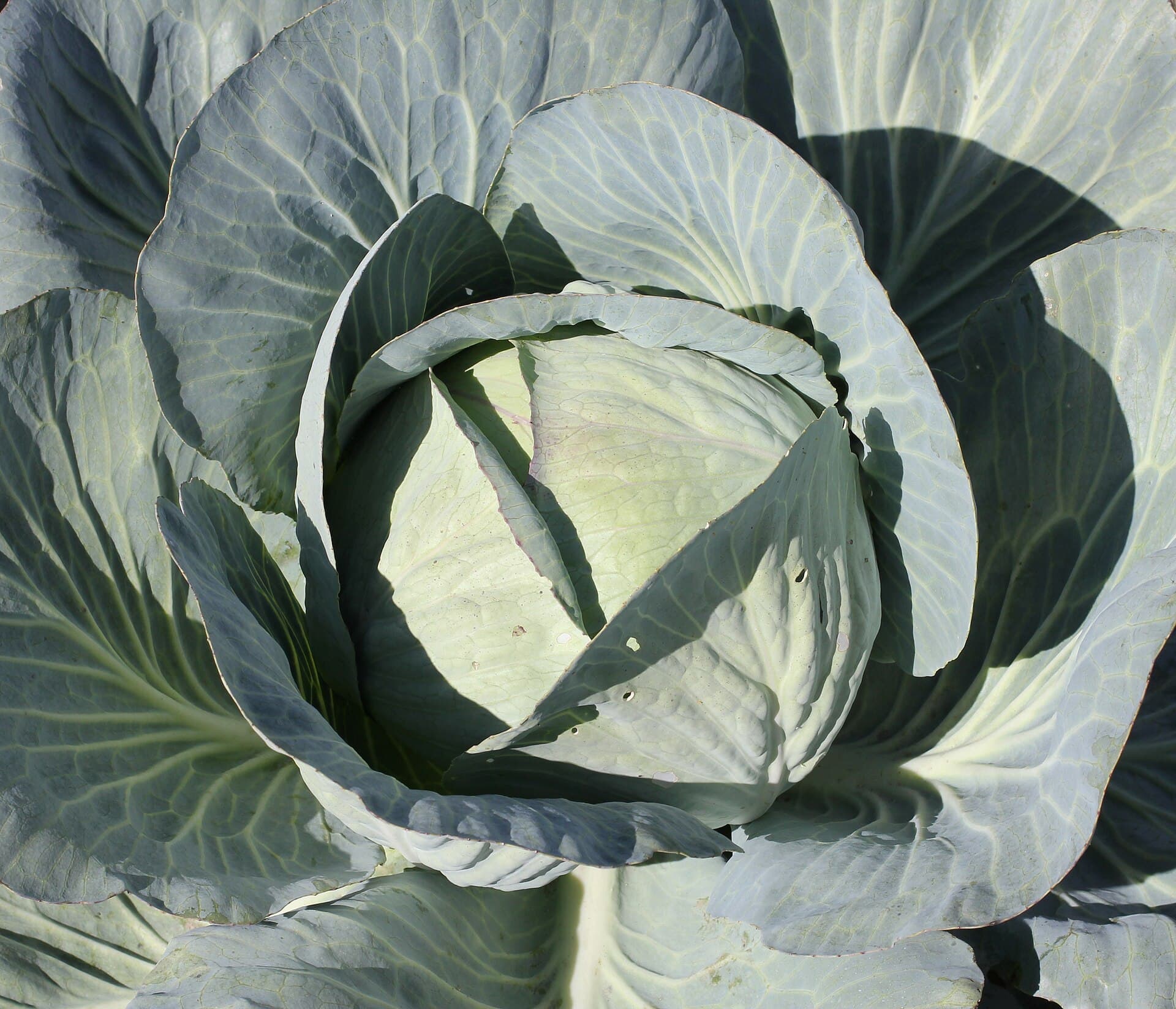
A cabbage head is a stack of leaves wrapped tightly around a short core. Give the plant a cool growing window, room to spread and steady moisture; then judge the head by firmness rather than by the calendar alone. Minnesota Extension describes head formation.
At a glance
- Light: Full sun, at least 6 hours of direct light; 8 to 10 preferred.
- Water: Medium; keep soil consistently moist while heads form.
- Days to maturity: 60 to 100 days, depending on variety. For transplants, count the packet's maturity days from setting plants in the garden; direct seeding takes additional time.
- Spacing in the row: 12 to 18 in (30 to 46 cm); 12 in is for smaller heads, while larger cultivars need more room.
- Good neighbors, by garden tradition: Dill, chamomile, onion, nasturtium, thyme and sage.
- Keep apart, by garden tradition: Strawberry, tomato and pole beans.
When to plant
Use the average last spring frost and first fall frost dates for your location, available through your state extension service. Illinois Extension explains why frost dates and the crop's days to maturity both matter. A hardiness zone describes winter minimum temperatures, not the start or end of your vegetable season. Head cabbage grows best in cool weather, so plan a spring crop to head before the hottest weather or a fall crop to head as days cool.
For spring, start seed indoors about four to six weeks before the intended transplant date. Maryland Extension uses that lead time and advises hardening seedlings before they go into the garden. Minnesota Extension cautions that small seedlings are frost sensitive even though older cabbage tolerates cold; wait for a suitable forecast or protect early transplants. Spring direct seeding can leave heads forming in summer heat, which reduces quality in many gardens.
For fall, start transplants or sow seed directly while there is enough growing season left. Count backward from your first fall frost using the selected cultivar's maturity period, then add seedling growth time if sowing directly. Minnesota reports 60 to 100 days to maturity and says direct-seeded cabbage can take up to three weeks longer than transplants. Minnesota Extension gives the comparison.
Where and in what soil
Choose a sunny bed with well-drained soil that still holds moisture. Cabbage grows well in fertile soil around pH 6 to 7, according to Minnesota Extension. Test the soil before adding fertilizer; finished compost can improve structure and water retention. Full sun means at least six hours of direct light, with eight to ten preferred by Maryland Extension.
Move cabbage-family crops around the garden if you can. Broccoli, cauliflower, cabbage and other brassicas share pests and diseases, including clubroot. Minnesota advises a four-year break before growing a related crop in the same place. Its cabbage guide also notes that swollen roots and stunted plants may signal clubroot. Record where you plant each year's broccoli and cauliflower as well as cabbage.
Planting
Start spring seed about 1/4 inch (6 mm) deep in seed-starting mix and give seedlings bright light. Harden them by gradually increasing outdoor light and wind exposure over a week or more, bringing them in when nights turn very cold. Set transplants at the depth they grew in their pots, firm the soil gently and water them in. Minnesota spaces spring plants about 15 to 18 inches (38 to 46 cm) apart; Maryland gives a similar range. Close spacing can make smaller heads, while large-headed cultivars need more space. For conventional rows, the two extensions differ: Minnesota suggests 24 to 30 inches (61 to 76 cm), Maryland 30 to 36 inches (76 to 91 cm). Choose room for your cultivar and a path to work the bed. Minnesota Extension and Maryland Extension give those methods.
For fall direct sowing, put about three seeds 1/4 to 1/2 inch (6 to 13 mm) deep at each intended plant position, roughly 15 to 18 inches (38 to 46 cm) apart. Keep the surface moist until emergence, then thin to one seedling per position. Minnesota Extension gives this direct-seeding approach.
Care
Water evenly. Consistent moisture helps leaves build a firm, crisp head. Minnesota says about 1 inch (2.5 cm) of rain per week is enough in many soils; sandy soil may need water more often. Check moisture below the surface with a trowel, especially as the head grows. A shallow damp layer over dry soil does not water the root zone. Mulch after plants establish to slow evaporation and keep weeds down. Minnesota Extension gives these checks.
Weed and feed carefully. Cabbage roots are shallow. Pull weeds young or slice them at the soil surface rather than hoeing deep beside the stem. Too much nitrogen can produce large leaves without a firm head, and crowding or water stress can also prevent heading. Maryland Extension describes the shallow roots; Minnesota Extension discusses failed head formation.
Good neighbors, and plants to keep apart
Dill, chamomile, onion, nasturtium, thyme and sage are traditional cabbage neighbors. Some gardeners keep cabbage away from strawberry, tomato and pole beans. Treat these as layout traditions, not proof of a helpful or harmful chemical effect. Give each crop its required space and light, and use a cover or direct inspection for known pests. The nearby tomato guide can help plan a separate warm-season bed.
Pests and problems
Flea beetles make tiny holes in young leaves. Imported cabbageworm, cabbage looper and diamondback moth caterpillars chew larger holes and may move into the forming head. Inspect leaf undersides at least weekly and more often as damage appears; handpick caterpillars or exclude egg-laying butterflies and moths with a well-secured floating row cover. Minnesota Extension's cabbage guide lists these pests, and its caterpillar guide describes scouting and covers.
A cabbage that wilts despite moist soil may have root injury; cabbage maggots feed below ground, while clubroot produces swollen roots and stunting. Yellow triangular patches from leaf edges can indicate black rot. Diagnose the symptom before changing the watering routine, and rotate future brassica plantings. Heavy rain near maturity can also split a head even when the leaves otherwise look healthy. Minnesota Extension distinguishes these problems.
Harvest and storage
Press the head gently: harvest when it is firm and a useful size for your kitchen. Size varies with cultivar, fertility and spacing, so a small, solid head may be ready. Cut the head above its outer leaves. Do not leave mature heads indefinitely: some varieties hold well in the field, but heavy rain can split them. If a head is ready and you need a short delay, Minnesota describes twisting it a quarter turn or cutting some roots on one side to reduce water uptake. Prompt harvest is simpler. Maryland Extension gives the firmness cue; Minnesota Extension explains splitting.
Refrigerate the harvested head. Maryland Extension gives about two weeks in a household refrigerator for cabbage you plan to cook; its much longer storage figure assumes very cold, humid conditions.
Common questions
Why did my cabbage not make a head?
Check whether the center of the young plant was damaged by cold, insects or handling. Too much nitrogen, crowding and water stress are other possible causes. The leaves alone cannot identify a single cause; look at the growing point and review conditions over the season. Minnesota Extension describes growing-point damage.
Why did a firm head split?
Mature heads can split after heavy rain increases water uptake. Harvest firm heads promptly, especially when rain is forecast. Varieties also differ in how long they hold in the field. Minnesota Extension gives the cause and cultivar variation.
Can cabbage handle a frost?
A mature plant tolerates below-freezing temperatures better than a small seedling. Minnesota suggests protecting heads if overnight lows fall below 25°F (-4°C). Check the forecast and the plant's growth stage rather than treating all cabbage as equally cold hardy.