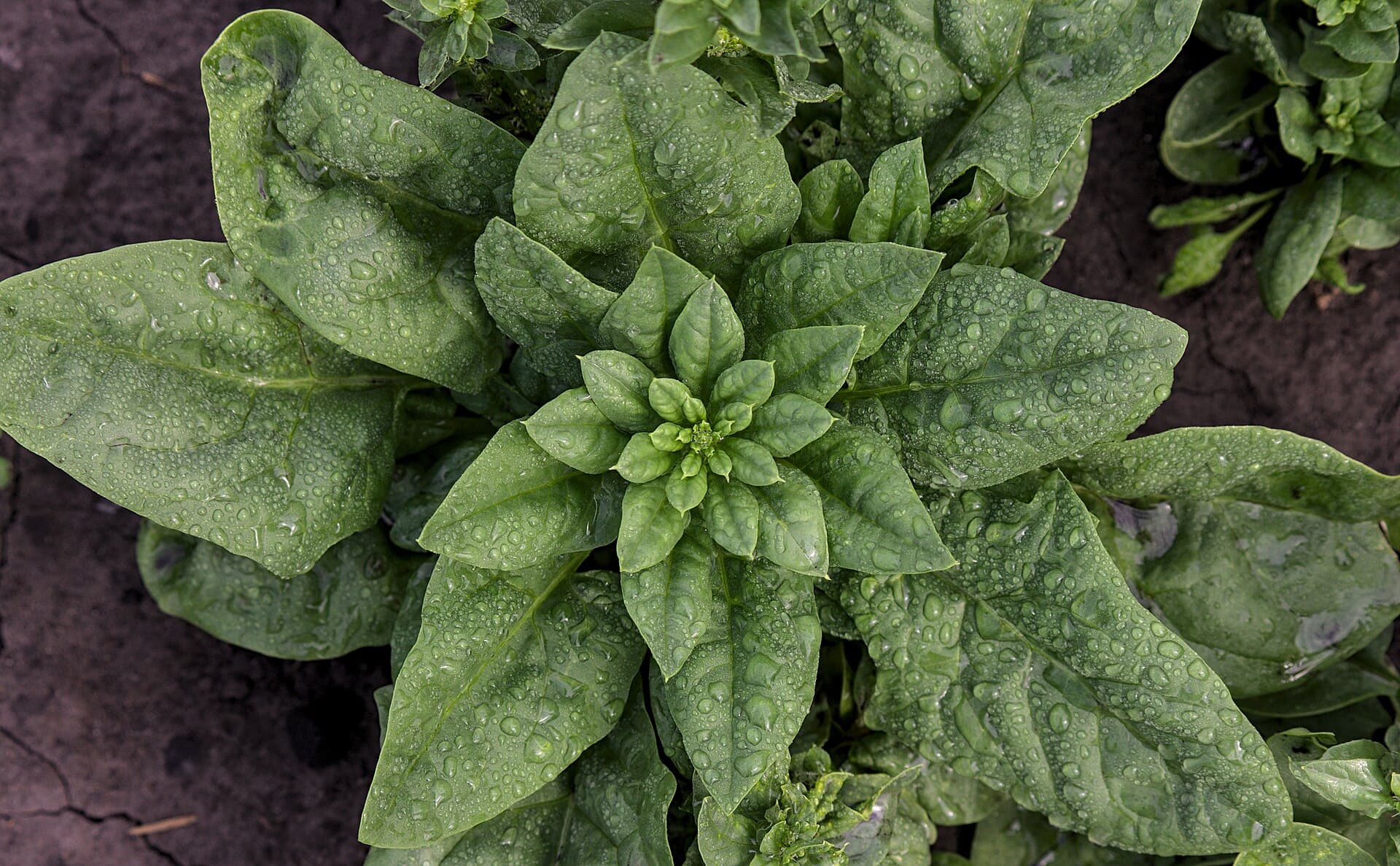
True spinach (Spinacia oleracea) makes tender leaves in cool weather, but its spring harvest can end quickly as days lengthen and temperatures climb. Smooth-leaf and crinkled savoy cultivars need the same basic care; neither is a heat-loving vine. New Zealand and Malabar “spinach” are different plants, so their warm-weather advice does not apply here. Maryland Extension distinguishes these crops and leaf types.
At a glance
- Light: Partial sun; full sun works well in cool spring and fall weather.
- Water: Medium; keep moisture even.
- Days to maturity: 40 to 50 days, depending on cultivar and harvest size.
- Spacing in the row: 3 to 4 in (8 to 10 cm).
- Spacing between rows: 12 in (30 cm).
- Plants per square foot: 9 for a compact bed.
- Good neighbors, by garden tradition: Strawberry, brassicas, peas.
When to plant
Ask your state's extension service for the average last spring frost and first fall frost dates for your location. Hardiness zones describe winter cold, not when your bed becomes workable or when the last spring frost occurs. For direct sowing in spring, use the first workable soil with a temperature of at least 40°F (4°C) as a starting point; Utah State Extension says seed can germinate then, but it germinates best at 55 to 65°F (13 to 18°C). Maryland Extension recommends waiting until soil reaches 45°F (7°C). Both are useful thresholds: a cold early sowing may emerge more slowly.
For spring, direct-sow roughly 2 to 4 weeks before the average last frost if the soil is workable and warm enough; set out transplants nearer that frost date. Utah State Extension gives these planting windows. For a fall crop, Minnesota Extension suggests sowing about two months before the average first frost. Check the seed packet's maturity estimate and avoid sowing while soil is still too hot: Utah State reports reduced germination above 80°F (27°C).
A few small spring sowings a week or two apart can spread the picking, but stop when warming weather makes establishment unreliable. Long days signal true spinach to bolt; heat and drought speed that change. Slow-bolting cultivars can help at the edge of the season, but they cannot make true spinach a dependable summer crop everywhere. Minnesota Extension explains the day-length response and Utah State Extension describes slow-bolting selections.
Where and in what soil
Choose fertile, well-drained ground. Full sun is suitable in cool weather, while partial shade with about 4 to 6 hours of direct light can work. A soil test can guide nutrient additions; finished compost can improve a poor bed. Keep the seedbed fine enough for shallow sowing and avoid planting in saturated soil. Maryland Extension gives the light and fertility guidance; Utah State Extension emphasizes drainage and a soil test.
Spinach does best with a soil pH of 6.5 to 8 according to Minnesota Extension. If a test says the soil needs adjustment, follow the local recommendation rather than adding lime or fertilizer by guesswork. A bed that stays moist but drains freely is more important than a complicated feeding routine.
Planting
Direct-seeding is the simplest method. Sow about 1/2 inch (1.3 cm) deep, firm the soil lightly, and keep the top layer moist until seedlings appear. In suitable temperatures emergence commonly takes about 7 to 10 days. Thin established seedlings to 3 to 4 inches (8 to 10 cm) apart in rows roughly 12 inches (30 cm) apart. Eat the tender thinnings. Utah State Extension gives the depth, emergence time and row spacing.
For a bed of small leaves, you may sow more closely and take whole plants young. If you want larger leaves from repeated picking, give each crown room. Illinois Extension advises 2 to 4 inches (5 to 10 cm) after thinning in rows, or 4 to 6 inches (10 to 15 cm) in all directions in a bed. Those different layouts reflect different harvest methods, not an exact spacing needed by every cultivar.
Care
Keep moisture steady. Water deeply during dry spells and check the soil beneath the surface. Minnesota Extension advises a thorough soaking if the bed receives less than 1 inch (2.5 cm) of rain in a week; sandy ground may need more frequent checks. Irregular moisture can slow leaf growth and speed spring bolting. Minnesota Extension gives that rainfall guide.
Weed gently. Spinach seedlings compete poorly with weeds. Hand-pull young weeds or loosen only the surface near the row to protect roots. Once the plants are established, organic mulch beside the row can reduce new weeds and help keep soil cool. Utah State Extension recommends shallow cultivation and mulch.
Feed from evidence. A fertile bed may need no extra fertilizer. If leaves stay pale and growth is slow despite adequate moisture, consult a soil test or local extension advice. Illinois Extension says supplemental fertilizer is unnecessary when the soil is already fertile and well drained.
Good neighbors, and plants to keep apart
Gardeners sometimes grow spinach near strawberries, brassicas, or peas. Treat those as optional garden traditions. Neither proximity nor a companion label promises pest control or a longer spinach season. Give spinach enough light and moisture and keep the bed accessible for frequent leaf picking. There is no specific plant that this guide asks you to keep apart from spinach.
Pests and problems
Blotched or tunneled leaves. Spinach leafminer larvae feed between leaf surfaces, leaving pale trails or blotches. Inspect leaves, remove heavily affected ones, and consider a lightweight insect mesh over a new planting. Maryland Extension identifies spinach leafminer damage; Minnesota Extension recommends mesh to exclude leafminers.
Holes or cut seedlings. Slugs can chew holes, while cutworms may sever young plants at the base. Look for the cause before acting; a tunneled leaf, a ragged hole and a cut stem point to different problems. Minnesota Extension lists these signs.
Flower stalks or bitter leaves. Bolting is the shift to flowering, not a disease. Increasing day length, warm weather and drought can push a spring crop toward seed, after which leaf quality drops. Harvest the remaining usable leaves and plan another sowing for cooler weather. Minnesota Extension explains the triggers.
Harvest and storage
Pick individual outer leaves when large enough to use, leaving the crown and young center leaves intact for another harvest. You can also cut a whole plant or take a final harvest before its flower stalk develops. Small leaves are ready earlier than the packet's full-size maturity date. Utah State Extension describes leaf picking and cutting above the crown.
Harvest in the cool part of the day and refrigerate leaves promptly. Use them while fresh: Minnesota Extension says these greens are short-lived in an ordinary refrigerator. Fall spinach may tolerate frost; overwintering is possible in some local conditions with protection, but it is not a promise for every winter. Maryland Extension qualifies its overwinter advice for mild areas.
Common questions
Can I grow spinach through summer?
True spinach usually bolts as days lengthen, especially with heat or drought. A slow-bolting cultivar may extend spring picking, but summer harvest is unreliable in many places. New Zealand and Malabar spinach are different crops and have different warm-weather habits. Maryland Extension distinguishes them.
Should I thin spinach if I want baby leaves?
You can grow a denser stand and harvest whole plants young. Thin farther apart for repeated picking of larger leaves. Illinois Extension describes both arrangements.
Why are my spinach leaves bitter?
Check for a flower stalk and consider recent heat or dry soil. Those stresses can lower leaf quality; once a plant bolts, a new cool-season sowing is usually the better plan. Minnesota Extension links heat, water stress and bolting to bitterness.